Why scam emails create false urgency (and how to fight back)

Most people assume the easiest way to spot a scam email is a typo-filled subject line or a suspicious sender address. That assumption is outdated. Today, why scam emails create false urgency is the more important question, because urgency has overtaken grammar errors as the leading red flag people recognize in fraudulent messages. Scammers have gotten better at writing. What they still rely on is panic. This guide explains exactly how false urgency works, why it’s so effective at bypassing your better judgment, and what you can do right now to protect yourself and your business.
Table of Contents
- How scammers use false urgency to manipulate decision-making
- Common false urgency tactics scam emails use to pressure you
- Why urgency tricks work: the psychology behind reactive responses
- How to protect yourself: resisting false urgency in scam emails
- Recognizing urgency scams in real-world scenarios and email examples
- Why teaching people to slow down is the best defense against false urgency scams
- Protect yourself from scam emails with ScamKit’s expert tools
- Frequently asked questions
Key Takeaways
| Point | Details |
|---|---|
| Urgency blocks verification | Scammers use false urgency to stop you from checking if a message is real before acting. |
| Pressure triggers reactivity | Urgent messages push people to make quick, reactive decisions instead of thoughtful ones. |
| Common urgency tactics | Scammers employ countdowns, fake deadlines, and threats to create artificial time pressure. |
| Pause to protect yourself | Deliberately pausing to verify suspicious messages independently is the strongest defense. |
| Use tools for detection | Free online resources like ScamKit help you analyze suspicious emails and links before acting. |
How scammers use false urgency to manipulate decision-making
Urgency is not a coincidence in scam emails. It is the whole strategy. Scamwatch confirms that scammers deliberately create time pressure to make you act quickly so you don’t pause to check whether what they’re saying is real. That pause is exactly what they’re trying to eliminate.
When you feel rushed, your brain shifts gears. Instead of thinking carefully, you react. Research cited by Investopedia explains that when money, safety, or relationships appear to be at risk, decision-making becomes reactive rather than deliberate. You stop asking “is this real?” and start asking “how do I fix this fast?” That mental switch is the scammer’s goal.
Here is how false urgency in scams typically shows up in your inbox:
- Countdown timers embedded in emails that tick down to a fake deadline
- Account closure threats claiming your account will be suspended unless you verify immediately
- Overdue payment warnings demanding you settle a balance you don’t recognize
- Limited-time offers that expire within hours, pushing you to buy or claim something before checking
- Security alerts warning your device or account has been compromised and needs immediate action
“Scammers create time pressure to make you act quickly so you don’t check whether what they say is real.”. Scamwatch
The key insight here is that none of these tactics require a scammer to be technically sophisticated. They just need you to feel scared enough to skip recognizing scam emails for what they are. That’s a low bar, and it works more often than most people expect.
Common false urgency tactics scam emails use to pressure you
Now that you understand why urgency works, it helps to know the specific playbook scammers follow. These are not random choices. Each tactic is designed to trigger a specific fear response.
Scamwatch documents the most common scam email pressure tactics in use today:
- Fake countdown timers and deadlines: “Your account will close in 24 hours” creates a ticking clock that feels real even when it isn’t.
- Account suspension threats: Messages claiming your bank, streaming service, or email will be shut down unless you verify your details immediately.
- Fake tech support warnings: Pop-ups or emails claiming your computer has a virus, urging you to call a number right now. That number connects to the scammer.
- Expiring reward points: A message says your loyalty points expire today and you must click to redeem them. The FTC warns this is a phishing tactic designed to get you clicking before you verify, which can lead to data theft or malware installation.
- Limited stock or availability claims: “Only 2 left at this price” pushes you to buy before you’ve checked whether the seller is legitimate.
Here’s a quick comparison of how legitimate companies communicate versus how scammers do:
| Communication type | Legitimate company | Scam email |
|---|---|---|
| Tone | Calm, professional | Alarming, urgent |
| Deadline | Reasonable notice (days/weeks) | Hours or minutes |
| Action requested | Log in via official site | Click a link in the email |
| Contact method | Known phone/email from website | Unknown number or reply address |
| Verification offered | Easy to confirm independently | Difficult or impossible to verify |
Pro Tip: When an email creates urgency around suspicious SMS tactics or account access, open a new browser tab and go directly to the company’s official website. Never use the link in the message.
Why urgency tricks work: the psychology behind reactive responses
Understanding the tactics is one thing. Understanding why they work on smart, careful people is what really helps you stay protected.
Investopedia explains that scams succeed not because victims are unintelligent, but because the message conditions you to decide under pressure with limited information. Uncertainty combined with perceived risk pushes you into reactive decision-making. That’s not a character flaw. It’s human wiring.
Here is the sequence that plays out when you receive a fake urgency email:
- You read a threat (account suspended, payment overdue, virus detected)
- Your stress response activates, narrowing your focus to the problem in front of you
- You look for the fastest solution, which the scammer has conveniently provided as a link or phone number
- You act before verifying, because the manufactured deadline makes verification feel like a risk in itself
- The scammer gets what they wanted: your credentials, your money, or access to your device
“Scams succeed not because recipients lack intelligence, but because the message conditions you to decide under pressure with limited information.”. Investopedia
The real danger is that this sequence can happen to anyone. Busy small business owners are especially vulnerable because they’re already operating under real time pressure. An email claiming a payment failed or a vendor account is suspended fits right into a stressful workday. The importance of verification becomes easy to skip when you’re already overwhelmed.
Pro Tip: The single most effective thing you can do when you feel urgency from an email is to wait five minutes before taking any action. That pause alone interrupts the scammer’s entire strategy.

How to protect yourself: resisting false urgency in scam emails
Knowing the psychology is useful. Having a clear action plan is what actually keeps you safe. Here are concrete steps you can take right now.
- Never click links in urgent emails. Go directly to the company’s official website by typing the address yourself. The FTC recommends checking the company’s website or app directly rather than using any link in the message.
- Check the sender’s email address carefully. Scammers often use addresses that look close to real ones, like “support@paypa1.com” instead of “support@paypal.com.” A quick glance at the actual address can reveal the trick.
- Treat any deadline under 24 hours as a red flag. Legitimate companies rarely demand action within hours. Scamwatch advises creating a deliberate verification pause by checking messages through independent channels before acting.
- Use multi-factor authentication (MFA) on all sensitive accounts. MFA means a stolen password alone is not enough to access your account, giving you a safety net even if you accidentally engage with a scam.
- For business owners: create a written policy. Any request involving payments, wire transfers, or account changes that arrives under urgency must require approval from a second person before action is taken. This one rule can prevent costly mistakes.
For safe scam recognition steps, the pattern is always the same: slow down, verify independently, and never let a fake deadline override your judgment. You can also review common scam techniques to build a broader awareness of what to watch for.
Recognizing urgency scams in real-world scenarios and email examples
Theory helps. Real examples help more. Here are the most common scenarios where fake urgency in emails shows up, along with the warning signs to watch for.
KnowBe4 reports that 34% of people now identify pressure to act quickly as the primary red flag of a fraudulent email. That’s a significant shift from just a few years ago when grammar mistakes topped the list. Scammers have adapted, and so must you.
Here are the most common urgent scam email examples and their red flags:
- Bank impersonation: “Your account has been locked due to suspicious activity. Verify now to restore access.” Red flags: generic greeting, link to a non-bank domain, no specific account details.
- Package delivery scam: “Your package could not be delivered. Pay a $2.99 fee within 12 hours or it will be returned.” Red flags: you weren’t expecting a package, the fee request is unusual, the link goes to an unfamiliar site.
- Tech support warning: A pop-up or email claims your computer is infected and you must call a number immediately. Red flags: real tech companies don’t contact you this way, the number is not on their official website.
- Rewards expiration: “Your 5,000 loyalty points expire tonight. Click here to redeem.” Red flags: you didn’t sign up for this program, the link domain doesn’t match the brand.
- Business email compromise (BEC): A message appearing to be from your CEO asks you to wire funds urgently for a deal. Red flags: unusual request, sent from a slightly different email address, no prior conversation about this transaction.
| Scam type | Urgency trigger | Primary red flag | Best response |
|---|---|---|---|
| Bank impersonation | Account locked | Non-bank link | Call your bank directly |
| Package delivery | 12-hour fee deadline | Unexpected fee | Check carrier’s official site |
| Tech support | Virus detected | Unsolicited contact | Ignore and close |
| Rewards expiration | Points expire tonight | Unfamiliar sender | Log in via official app |
| Business email compromise | CEO wire request | Unusual email address | Call the sender directly |
For deeper context on these scenarios, real phishing examples can help you build pattern recognition before a scam lands in your inbox.
Why teaching people to slow down is the best defense against false urgency scams
Most advice about scam emails focuses on recognition: spot the red flags, check the sender, look for typos. That advice is valuable. But it misses the deeper point.
The root of why urgency-based scams work is not that people fail to recognize warning signs. It’s that urgency short-circuits the moment when recognition would happen. By the time you’re reading the email, the scammer has already put you in a mental state where checking feels like a waste of time.
In business settings, this is especially costly. Scamwatch notes that in business email compromise scams, urgency short-circuits approval chains and causes expensive errors. The fix is not just awareness training. It’s formalizing a rule: no financial action is taken based on an urgent email alone, ever. That policy removes the human judgment call from the equation entirely.
There’s another angle worth considering. Even a perfectly written, grammatically flawless urgent email from what appears to be a trusted sender should be treated as unverified until you confirm it independently. The FTC advises treating links and attachments in any unsolicited message as potential payloads regardless of how professional the email looks. Appearance is no longer a reliable filter.
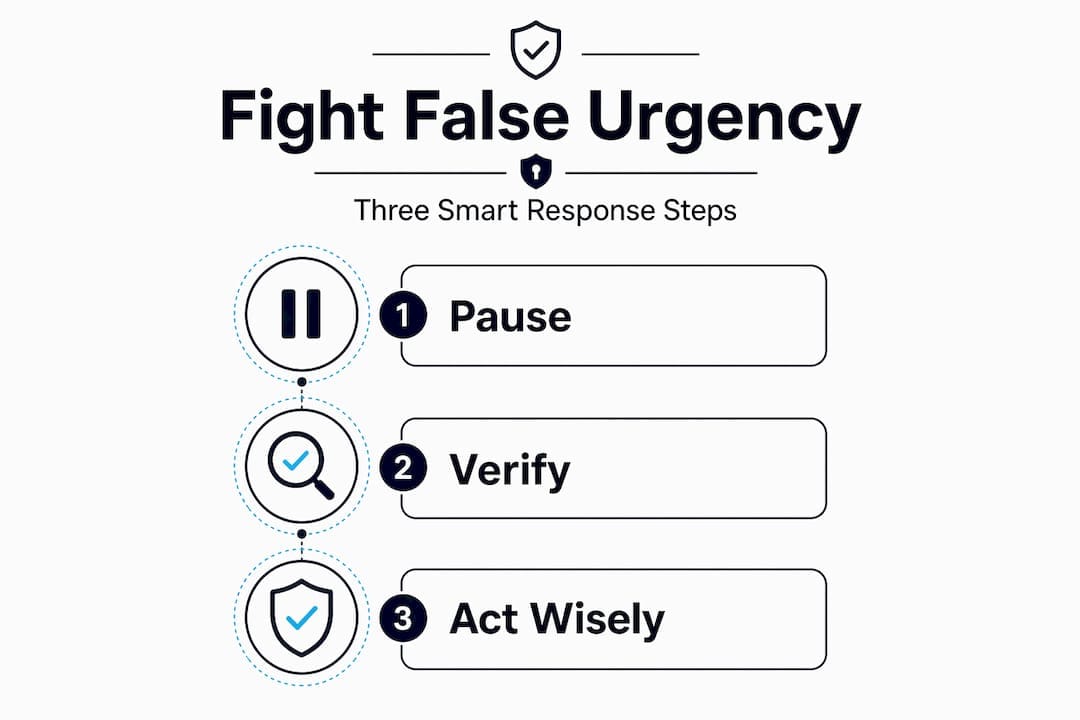
The real defense is building a habit, not just knowledge. When urgency arrives in your inbox, your trained response should be: pause, verify, then act. That three-step habit is harder to manipulate than any amount of scam awareness education alone. Scammers can’t engineer around a person who simply refuses to act under artificial pressure. For context on how this plays out with bank impersonation scams, the pattern is identical: urgency first, verification never.
Protect yourself from scam emails with ScamKit’s expert tools
You now know how false urgency works and what to do when it shows up in your inbox. The next step is having a tool that does the verification work for you.
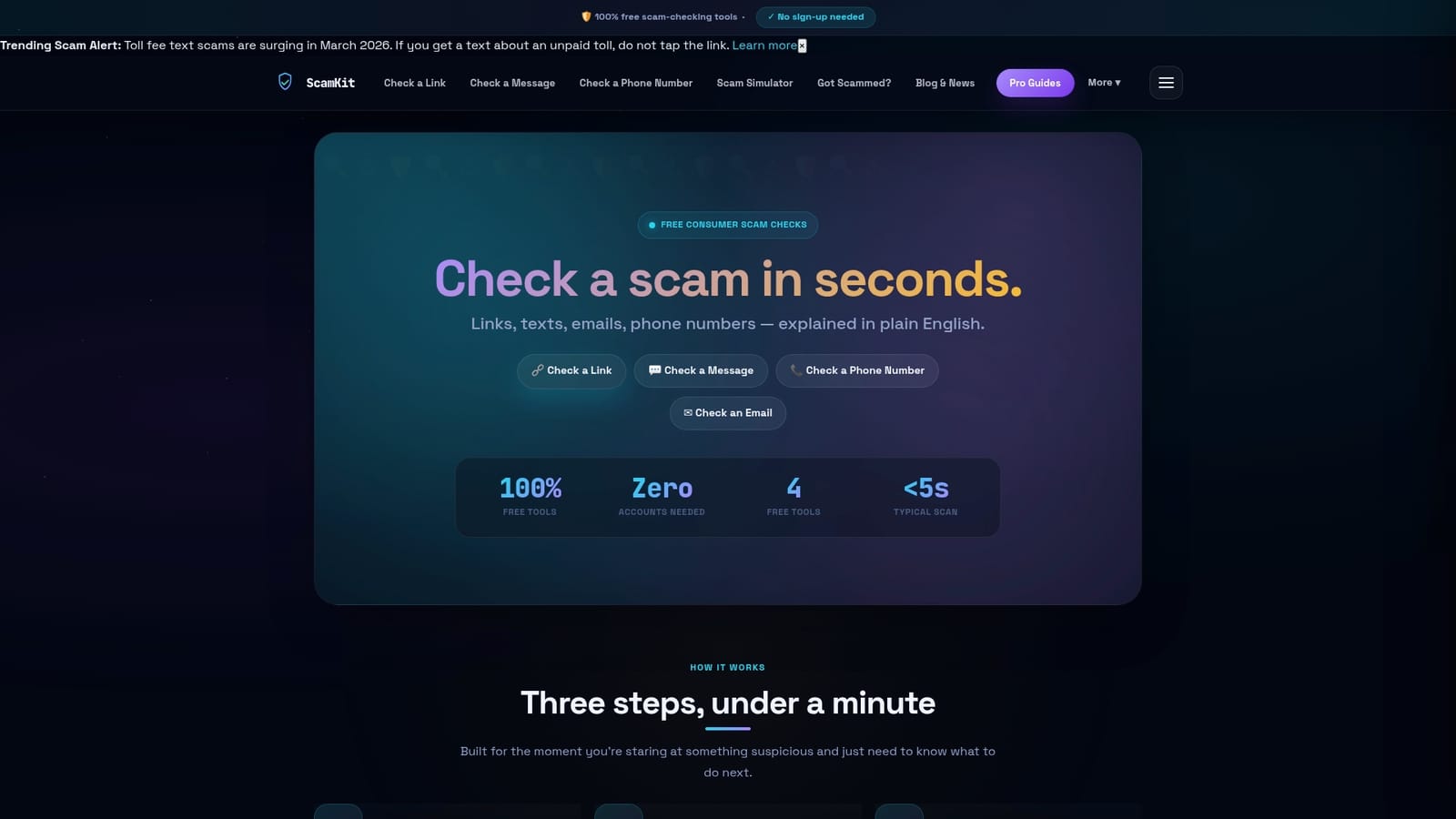
ScamKit is a free online platform that checks suspicious links, email headers, phone numbers, and messages against trusted security databases including Google Safe Browsing and AbuseIPDB. No sign-up required. Results in seconds. If a suspicious email lands in your inbox with an urgent link, paste it into ScamKit’s free link checker before you click anything. If you want to analyze where the email actually came from, the email header analyzer reveals the real sender path behind any message. Think of it as your verification pause, automated.
Frequently asked questions
What does it mean when a scam email creates false urgency?
False urgency in scam emails means scammers pressure you to act quickly with fake deadlines or threats, specifically to stop you from verifying the message is real before you respond.
Why do scammers want you to make fast decisions without verifying?
Scammers rely on urgency because it pushes you into reactive decision-making with limited information, which reduces your ability to spot inconsistencies or lies in their message.
How can I tell if an urgent email about expiring rewards is a scam?
Go directly to the company’s official website or app by typing the address yourself rather than clicking the email link, as the FTC recommends to avoid phishing scams designed to steal your data.
What should I do if I receive a scam email pressuring me to act quickly?
Don’t click any links. Pause, then verify the claim by contacting the company through a phone number or website you find independently, following the verification pause method Scamwatch recommends.
Why is urgency considered a red flag in scam emails today?
Because 34% of people now identify pressure to act quickly as the top sign of a fraudulent email, recognizing it as the scammer’s primary tool to bypass your normal scrutiny before you can think clearly.