Anonymous Scam Report Submission: Stay Safe and Be Heard
You saw something suspicious. Maybe it was a phishing email, a fake job offer, or a too-good-to-be-true investment pitch. You want to report it, but you don’t want your name attached. That hesitation is understandable, and it’s more common than you think. An anonymous scam report submission gives you a real way to fight back without putting yourself in the spotlight. This guide walks you through exactly how to do it, what information you need, where to submit, and how to protect your privacy every step of the way.
Table of Contents
- Key Takeaways
- Anonymous scam report submission: what, why, and where
- Preparing to submit your scam report
- How to submit your report step by step
- What happens after you submit
- Common challenges and how to get past them
- My take on why anonymous reporting deserves more credit
- Verify first, then report with confidence using Scamkit
- FAQ
Key Takeaways
| Point | Details |
|---|---|
| Anonymity is protected | Major platforms like the FTC and BBB Scam Tracker let you report without revealing your identity. |
| Report with what you have | You don’t need perfect evidence. Submit what you know now and add details later. |
| Prepare before you submit | Gather dates, amounts, and descriptions, and use a VPN or secure device for extra privacy. |
| Watch for recovery scams | Scammers often target victims a second time by posing as investigators who charge fees. |
| Your report matters at scale | Aggregated anonymous data helps law enforcement track fraud trends and protect others. |
Anonymous scam report submission: what, why, and where
An anonymous scam report submission is exactly what it sounds like. You provide details about a scam to an official or trusted reporting platform without including your name, contact information, or any personally identifying details. The goal is to give investigators what they need to spot patterns and warn others, without putting the reporter at risk.
Why does anonymity matter? Shame and fear are among the top reasons victims never report scams at all. People worry about judgment, retaliation, or becoming a target again. Anonymous reporting removes that barrier. It lets you contribute to fraud prevention without any personal exposure.
Here are the main platforms that accept anonymous reports:
- Federal Trade Commission (FTC): reportfraud.ftc.gov lets you submit a fraud report with minimal personal details required.
- Internet Crime Complaint Center (IC3): Managed by the FBI, this handles cybercrime reports and does not require your identity to file.
- BBB Scam Tracker: anonymous reporting options are built in, and reports are typically reviewed within 24 to 48 hours to identify fraud patterns.
- Crime Stoppers: Local and national tip lines that accept phone and online tips anonymously, sometimes with monetary rewards for high-value information.
- IRS: For tax fraud specifically, the IRS Form 3949-A allows anonymous reporting with potential whistleblower awards.
One thing to know: anonymous reporting does have limitations. Investigators cannot follow up with you for more details, so the more specific your initial submission, the more useful it becomes. You also may not receive a personal update on the outcome. That’s a fair trade-off for most people who simply want to help without the exposure.
Preparing to submit your scam report
Good preparation makes your report far more useful. You don’t need a lawyer or a file cabinet of evidence. You just need to think through what you know before you type anything.
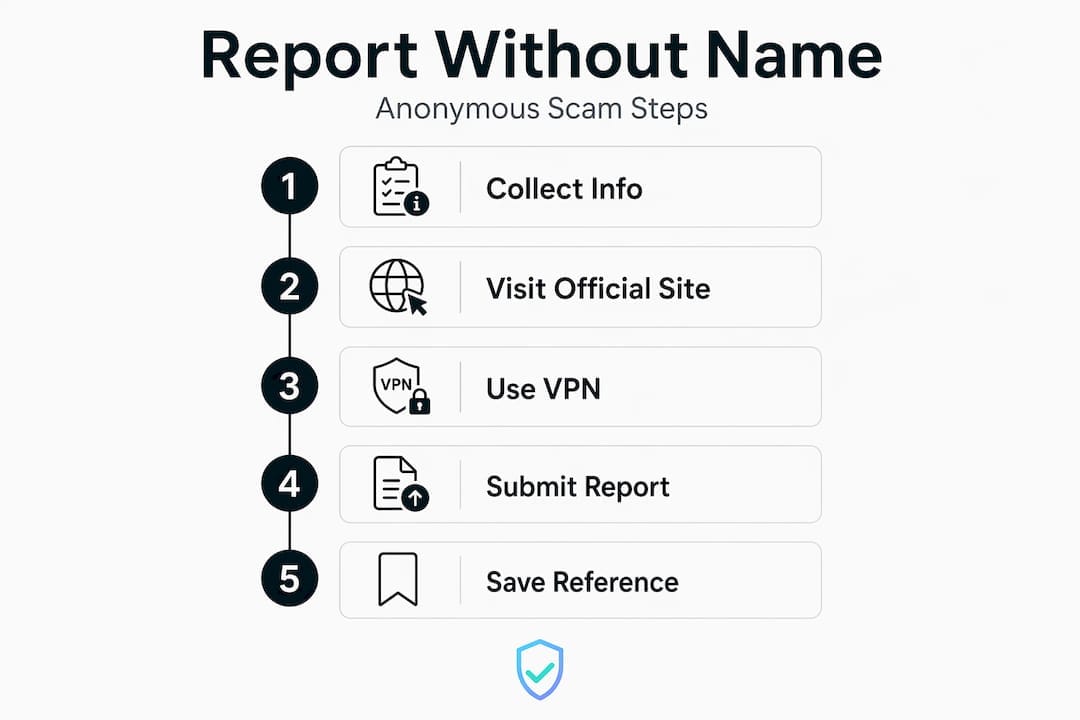
Here’s what to gather before you submit a fraud report:
- Dates and times. When did the scam contact first occur? When did any transactions happen? Even an approximate date is helpful.
- Names and identifiers. Scammer names (even fake ones), usernames, email addresses, phone numbers, websites, and social media handles.
- Transaction details. Amounts sent, payment methods used (wire transfer, gift card, cryptocurrency), and any confirmation numbers.
- Screenshots and records. Save copies of messages, emails, receipts, or screenshots. Store these on a personal, secure device rather than a work computer or public cloud folder.
- The scam description. A clear, plain-language account of what happened. Who contacted you, what they said, and what they asked for.
Now, the privacy piece. If you want true confidential scam reporting, a few extra steps go a long way. Use a VPN when accessing reporting portals, especially on public Wi-Fi. If you need to create an email account to receive a case confirmation number, set one up through a privacy-respecting service like ProtonMail rather than your primary email. Experts also recommend limiting social media exposure so scammers cannot harvest personal details to use against you again.
One mistake many people make: they wait. They think they need more evidence, a cleaner timeline, or a complete picture before reporting. That instinct costs investigators time. Report immediately with whatever you have. You can always add more later.
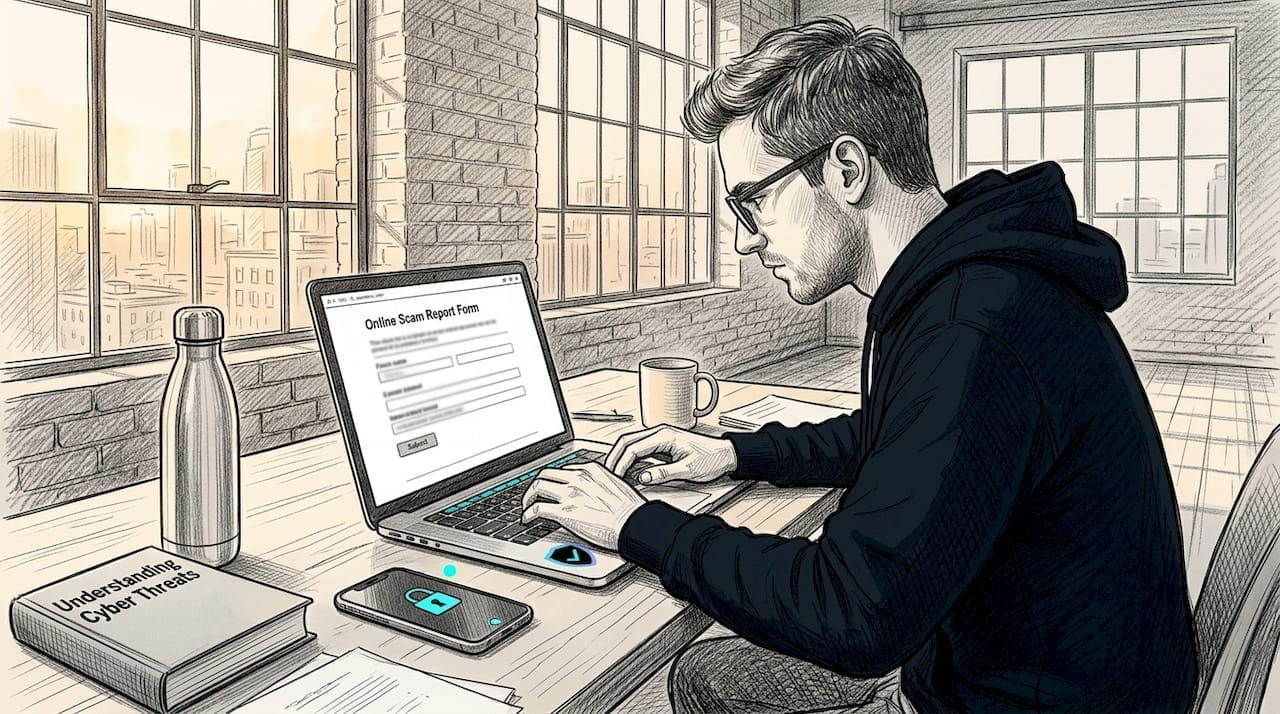
Pro Tip: If you’re worried about using your regular browser, open a private or incognito window before visiting any reporting portal. It won’t make you fully anonymous, but it reduces cookies and autofill from exposing your identity accidentally.
Another often-overlooked risk: caller ID spoofing. If someone calls you claiming to be an investigator from a government agency, don’t assume the number is real. Hang up and independently dial the official number listed on that agency’s government website. This protects you both before and after you report.
How to submit your report step by step
You have your information ready. Now it’s time to actually submit. Here’s how the process works across the most trusted channels for an anonymous fraud alert.
Submitting via the FTC
- Go to reportfraud.ftc.gov directly. Do not search for it and click a random link.
- Select the category that fits your scam (imposter, online shopping, phone scam, etc.).
- Fill in the details. The form does not require your name. An email address is optional.
- Save your confirmation number. The FTC uses aggregated data to build cases, so your individual report feeds into a larger enforcement picture.
Submitting via the IC3 (FBI)
- Visit ic3.gov and select “File a Complaint.”
- You will need to provide some contact information for the IC3, but this is kept confidential during investigations.
- Be as specific as possible about financial losses and methods used.
Submitting via BBB Scam Tracker
- Go to bbb.org/scamtracker.
- Click “Report a Scam.” No account is required.
- Describe the scam and provide any contact details the scammer used.
- Your submission is published anonymously to warn other consumers.
Here’s a quick comparison of reporting channels to help you choose:
| Platform | Anonymous option | Best for | Online or phone |
|---|---|---|---|
| FTC (reportfraud.ftc.gov) | Yes, name optional | General fraud and imposter scams | Online |
| IC3 (ic3.gov) | Partial (confidential) | Cybercrime and financial fraud | Online |
| BBB Scam Tracker | Yes | Consumer and business scams | Online |
| Crime Stoppers | Yes | Local scams with criminal activity | Phone and online |
| IRS (Form 3949-A) | Yes | Tax fraud and related scams | Online and mail |
Phone reporting is still a valid option, especially for seniors who may not be comfortable submitting online. Crime Stoppers tip lines at 1-800-222-TIPS accept calls without asking for your name. The downside is that you won’t have a written confirmation to reference later.
What happens after you submit
Once your anonymous scam report submission is in, the process moves into the hands of analysts and investigators. Here’s a realistic picture of what to expect.
- Pattern detection: Your report does not typically trigger a single investigation on its own. Agencies look for clusters of similar reports to identify active fraud operations. Anonymous data is essential for mapping cross-border crime trends and forecasting future victimization.
- Public alerts: When enough reports point to the same scam, platforms like BBB Scam Tracker and the FTC publish warnings that reach millions of consumers.
- Limitations: Because you reported anonymously, investigators cannot contact you. This is why specificity matters upfront. The more detail you provide, the less the anonymity costs the investigation.
- Financial institution reporting: In addition to official portals, contact your bank, credit card company, or payment app directly. File a dispute and ask about fraud protections. Institutions like Zelle, PayPal, and major banks have their own fraud teams that act faster on individual claims.
- Identity theft prevention: If the scam involved personal data, place a fraud alert or credit freeze with the three major credit bureaus: Equifax, Experian, and TransUnion. This prevents the scammer from opening new accounts in your name.
Pro Tip: When reporting to financial institutions, ask specifically for a “fraud case number” or reference number. You can track your claim’s status using that number without ever giving more personal information than necessary.
You can also follow up on some reports. The FTC assigns a report number you can reference if you later have additional information to add. For local Crime Stoppers tips, a code number is typically provided so you can add information anonymously through the same channel.
Common challenges and how to get past them
Knowing how to report a scam anonymously is one thing. Actually doing it is another. Here are the barriers people face most often, and how to handle each one.
- “I’m embarrassed it happened to me.” This is the most common reason people stay silent. The BBB’s Khesha Duncan notes that shame prevents countless reports. Scammers are professionals. Being deceived is not a character flaw.
- “I don’t have enough information.” Report anyway. Even partial information contributes to investigations. A single phone number or email address can connect multiple victims.
- “What if the reporting site is fake?” Type URLs directly into your browser. Verify you’re on .gov or .org addresses for official sites. You can also use Scamkit’s free URL checker to verify a reporting portal before you use it.
- “Someone already contacted me to help recover my money.” Be very cautious. Recovery scammers frequently target prior fraud victims by posing as law enforcement or investigators. Genuine agencies never ask for upfront fees to recover your losses.
- “I’m not sure which agency handles my type of scam.” Start with the FTC. They route reports to the right authorities and accept almost every category of consumer fraud. Check Scamkit’s scam reporting guide for category-specific direction.
My take on why anonymous reporting deserves more credit
I’ve spent a lot of time thinking about why fraud reporting rates stay so low even as scam losses climb year over year. Most people assume their single report won’t matter. That’s the misconception I’d push back on hardest.
The reality is that law enforcement doesn’t build cases from one dramatic witness coming forward. They build them from data. Dozens of reports pointing to the same phone number, the same fake website, the same script. Your anonymous tip is one more data point in a pattern that eventually becomes a federal enforcement action. That’s not an exaggeration. It’s how the system actually works.
What I also find underappreciated is the emotional side. Victims who report, even anonymously, consistently describe feeling less powerless afterward. You reclaim some control by turning passive victimhood into active participation. That matters beyond the legal outcome.
One thing I’d warn against: assuming that because you reported anonymously, you’re done protecting yourself. Use tools that verify what you’re dealing with before and after you report. Confirming whether a link or phone number is already flagged across security databases gives you stronger, more credible information to include in your submission. Scamkit was built with exactly that in mind, and tools like it can make your report more specific and therefore more useful.
The process isn’t perfect, and not every report leads to an arrest. But the alternative, staying silent, guarantees nothing changes.
. Isaiah
Verify first, then report with confidence using Scamkit
Before you submit that fraud report, it helps to know exactly what you’re dealing with. Scamkit is a free tool that checks suspicious links, phone numbers, emails, and messages against multiple trusted security databases, including Google Safe Browsing and AbuseIPDB, in seconds. No sign-up required.
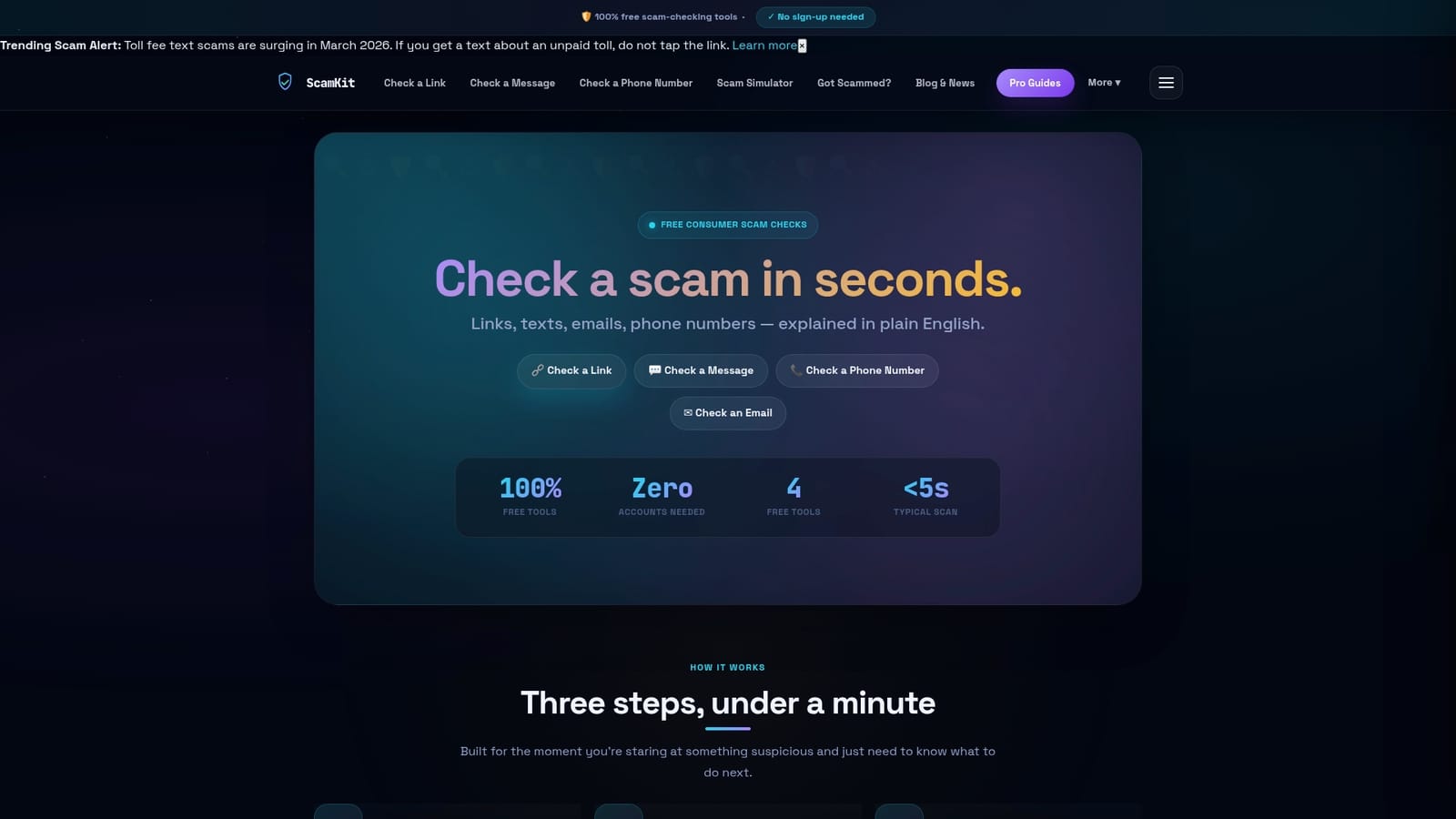
When you check a suspicious link or run a phone number lookup before reporting, you get a plain-English risk verdict you can include directly in your submission. That specificity makes your anonymous report far more actionable for investigators. You can also use Scamkit’s email header analyzer to identify spoofed senders, a detail that can be the difference between a useful tip and a vague complaint. Head to Scamkit and verify before you report.
FAQ
Can I really report a scam without giving my name?
Yes. Platforms like the FTC, BBB Scam Tracker, and Crime Stoppers all allow anonymous submission where your name and contact details are either optional or kept strictly confidential.
What if I only have a phone number or email address to report?
That’s enough to submit. Even a single identifier like a scam phone number can connect multiple victims and help investigators identify an active fraud operation.
How do I know if a reporting website is legitimate?
Type the URL directly into your browser rather than clicking a link. Official sites end in .gov or .org, and you can run the URL through Scamkit’s URL safety checker to verify it before entering any information.
Will I be contacted after submitting an anonymous report?
Generally no, which is the trade-off for anonymity. Some platforms like the FTC provide a report number you can use to add information later, but investigators typically cannot reach out to anonymous reporters.
What should I do if someone offers to recover my lost money after I report?
Do not pay anything. Recovery scammers specifically target fraud victims and pose as investigators or government agents. Legitimate agencies never charge fees to help you.