Why Scammers Use Phone Calls: Tactics and Risks
Phone scams are not slowing down. Scam calls hit 29.6 billion in the US in 2025 alone, a 15.4% jump from the previous year, with 1 in 3 scams happening over the phone. Understanding why scammers use phone calls is not just an interesting exercise. It is the first step toward protecting yourself. Phone calls give fraudsters tools that emails and texts simply cannot match: a live human voice, real-time pressure, and the psychological weight of a ringing phone. This article breaks down exactly how and why they do it.
Table of Contents
- Key Takeaways
- Why scammers use phone calls over other methods
- The technology behind scam phone call tactics
- Common phone scam methods you need to recognize
- The real effects of phone scams on victims
- How to protect yourself from phone scam risks
- My take on why phone scams keep working
- Check any suspicious number in seconds with Scamkit
- FAQ
Key Takeaways
| Point | Details |
|---|---|
| Phone calls trigger urgency | A live voice creates pressure that written scams cannot replicate, making victims act impulsively. |
| Spoofing makes calls look legitimate | Scammers fake local or trusted numbers to get you to pick up and lower your guard. |
| AI voice cloning is a real threat | Just three seconds of audio is enough to clone someone’s voice and use it in a scam call. |
| Silent calls are reconnaissance | Hanging up to a silent call still confirms your number is active, making you a target. |
| Verification is your strongest defense | Always hang up and call back using an official number you find yourself. |
Why scammers use phone calls over other methods
The simplest answer: phone calls work better. A scammer sending a phishing email might get a 1% response rate on a good day. A live caller who sounds authoritative, urgent, and local gets people talking in seconds. That gap is exactly why scammers have not abandoned the phone despite cheaper digital options.
The psychology runs deep. When a phone rings, most people feel compelled to answer. It is a reflex built over decades of conditioning. Scammers exploit that reflex by creating an environment of urgency before you even have a chance to think critically.
Here is what they specifically target during a call:
- Fear of consequences. Callers claim your Social Security number has been suspended, you owe back taxes, or your bank account will be frozen. Fear short-circuits rational thinking.
- Authority bias. A person speaking with confidence, using official-sounding language, feels credible. It is much harder to dismiss a confident voice than an email you can close.
- Time pressure. Scammers rarely give you time to verify. “You must act now or face arrest.” That manufactured urgency keeps you on the line and off balance.
- Familiarity. If the call appears to come from a number you recognize or a local area code, your guard drops before you even say hello.
Unlike an email, a live caller can improvise, adapt, and counter your objections in real time. That back-and-forth dynamic is something no automated text message can replicate.
Pro Tip: If a caller ever tells you not to hang up or threatens consequences for ending the call, that is your clearest signal to hang up immediately.
The technology behind scam phone call tactics
Scammers do not just rely on smooth talking. They use real technology to make their calls more convincing and harder to screen out.
Caller ID spoofing and neighbor spoofing
Caller ID spoofing is exactly what it sounds like. A scammer changes what appears on your screen to show any number they want. Think of caller ID as a sticky note that anyone can write on. There is no built-in verification in the traditional phone system, and VoIP (voice over internet protocol) technology makes changing that display trivially easy.
Neighbor spoofing goes one step further. Instead of showing a random number, scammers display a number with your local area code and often your same exchange (the first three digits after the area code). Local numbers are answered 3 to 4 times more often than out-of-area calls. Scammers know this. Displaying a familiar-looking number bypasses your first line of defense before you even decide to pick up.
| Tactic | What it does | Why it works |
|---|---|---|
| Caller ID spoofing | Displays any number the scammer chooses | Appears to come from a bank, government agency, or business |
| Neighbor spoofing | Shows a local area code and prefix | Local numbers trigger automatic trust and higher answer rates |
| Silent calls | Caller hangs up immediately | Confirms your number is active; prompts a callback |
| AI voice cloning | Generates a voice clone from audio samples | Mimics a family member or authority figure convincingly |
Silent calls and callback traps
Ever get a call that rings once and hangs up? That is not a mistake. Silent calls act as low-cost validation, confirming that your number is active and that you pick up. Your number can then be sold as a high-value lead to other scam operations or used to follow up with a more targeted pitch.
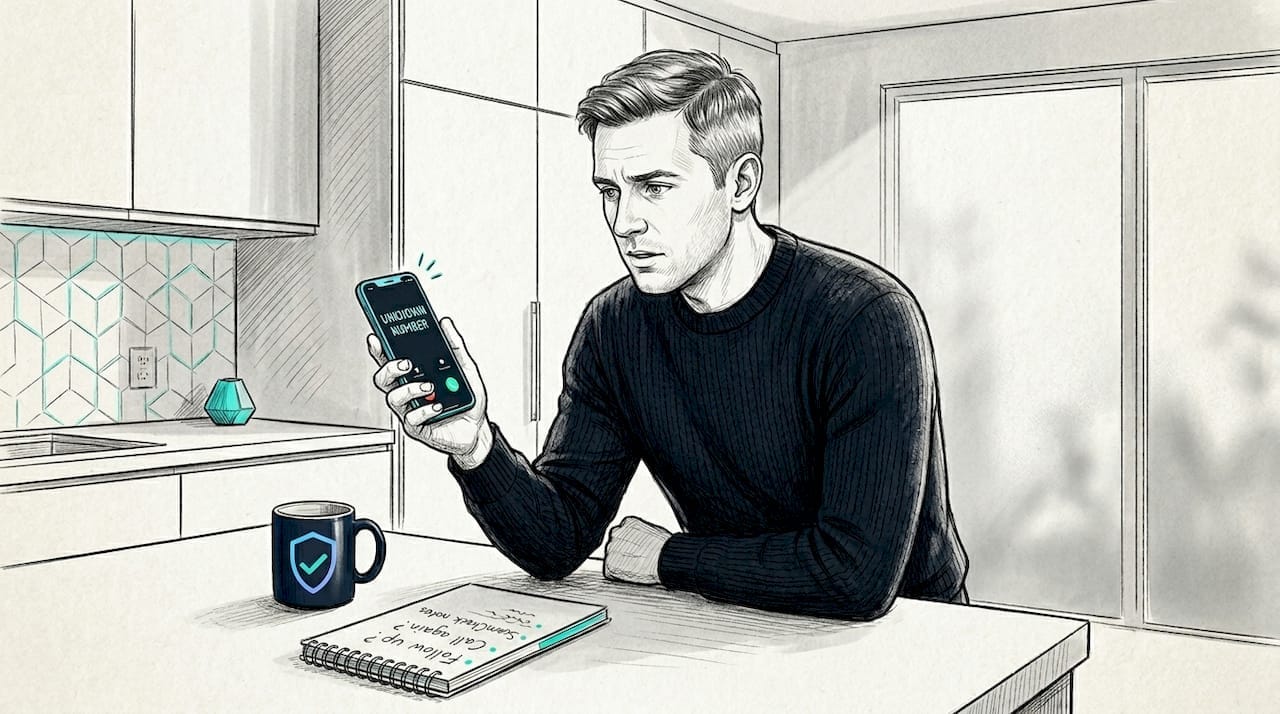
If you call back an unfamiliar number, you may be routed to a premium-rate line that charges by the minute, or straight into a scripted scam designed for people who already showed interest by calling back.
AI voice cloning
This is where scam phone call tactics have gotten genuinely alarming. AI voice cloning needs just three seconds of someone’s voice to create an 85% match. Scammers pull audio clips from social media, voicemails, or YouTube videos, and suddenly they have a convincing imitation of your parent, your boss, or your bank representative.
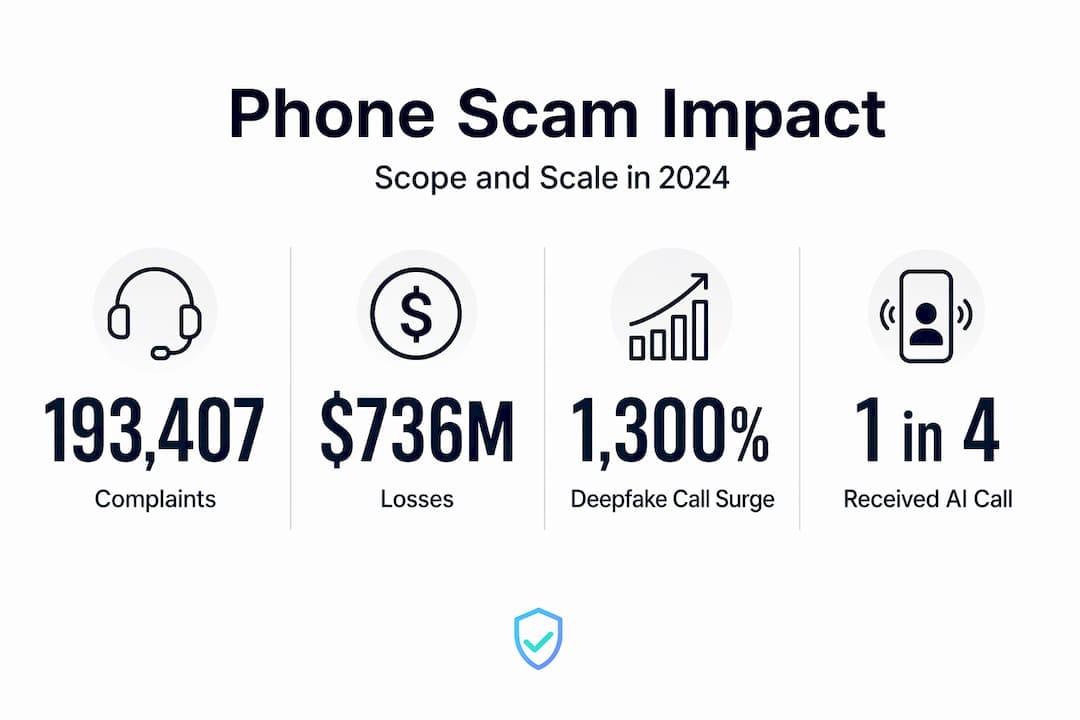
Deepfake scam calls surged 1,300% recently, and 1 in 4 Americans has already received one. Nearly half of people struggle to tell these cloned voices apart from the real thing. That statistic should change how skeptically you approach any unexpected call, even from a number you recognize.
Pro Tip: Set up a secret family code word that you can use to verify identity during suspicious calls. If the caller cannot say the word, hang up.
Common phone scam methods you need to recognize
Knowing the technology is one thing. Seeing how it shows up in real scams makes it click. Here are the most common phone scam methods in use today:
- One-ring and callback scams. Your phone rings once from an unfamiliar number, often with an international prefix that looks domestic. You call back out of curiosity and get charged premium rates, or handed off to a live scammer.
- IRS and government impersonation. A caller claims to be from the IRS, Social Security Administration, or Medicare. They say you owe money or your benefits are suspended. They demand immediate payment and threaten arrest if you refuse.
- Bank fraud alerts. You receive a call claiming to be from your bank’s fraud department. They ask you to verify your account by providing your PIN, card number, or one-time passcode. Real banks will never ask for these over the phone.
- Tech support scams. Someone calls claiming your computer has a virus and they need remote access to fix it. Granting that access hands a scammer control of your device and potentially your financial accounts. Scammers also buy paid search ads that show fake support numbers to people searching for help.
- Gift card payment demands. Many scam calls demand payment via gift cards, wire transfers, or cryptocurrency. No legitimate government agency or business will ever ask you to pay a debt with a gift card. Ever.
- Family emergency scams. Using AI voice cloning, scammers impersonate a grandchild or relative in distress, claiming they need bail money or emergency funds wired immediately.
The common thread across all of these is artificial urgency combined with an unusual payment request. Both red flags together are a near-certain sign of fraud.
The real effects of phone scams on victims
The financial damage from phone scams is staggering. The FBI logged 193,407 phishing and spoofing complaints in 2024, with imposter scams alone causing $2.95 billion in losses. That number reflects only what gets reported. Many victims never come forward out of shame.
But the effects of phone scams go well beyond money. Victims frequently describe lasting anxiety about answering calls at all. Some stop picking up their phones entirely, which creates its own problems. Trust erodes, not just in phone calls but in institutions generally. A senior who gets defrauded by someone claiming to be their bank often becomes deeply suspicious of their actual bank afterward.
There is also a systemic cost. Call flooding, where scammers bombard specific numbers or area codes with automated calls, ties up phone lines and can interfere with legitimate emergency communications. Telecom companies spend enormous resources fighting this, and those costs ultimately filter down to consumers.
The most critical thing you can do is avoid engaging at all. Even saying “yes” on a recorded line can be clipped and reused. Preventing interaction is genuinely your best protection.
How to protect yourself from phone scam risks
Awareness is only valuable if it changes your behavior. Here is a practical, step-by-step approach to reducing your exposure:
- Screen calls from unknown numbers. Let unfamiliar calls go to voicemail. Legitimate callers leave messages. Scammers rarely do.
- Never verify your identity to an incoming caller. If someone calls claiming to be your bank, hang up and call the number on the back of your card. Legitimate organizations never object to you calling back on your own terms.
- Check suspicious numbers before calling back. Use a tool like Scamkit’s phone number checker to see if a number has been flagged for fraud before you engage.
- Register on the Do Not Call Registry. It will not stop scammers, but it reduces legitimate telemarketing volume, making scam calls easier to spot.
- Enable call blocking features. Most carriers offer free spam-call filtering. Third-party apps add another layer. Use both.
- Never engage with silent calls. Do not call back. Do not pick up again. The more you engage, the more validated your number becomes.
- Report every scam call. File reports with the FTC at reportfraud.ftc.gov. This data feeds into the systems that protect other people.
For a deeper breakdown of how to spot scam calls before they get traction, Scamkit has a full guide worth bookmarking.
Pro Tip: When in doubt about any unexpected call, use a real-time phone number lookup before calling back. Thirty seconds of checking can save you thousands of dollars.
My take on why phone scams keep working
I have spent years looking at how scam tactics evolve, and here is what I keep coming back to: the technology gets more sophisticated, but the underlying psychology never changes.
The scammers I have studied do not think of themselves as opportunistic thieves. They operate like businesses, tracking answer rates and callback rates, optimizing scripts, and rotating numbers the moment one gets flagged. What makes phone calls uniquely dangerous is that they collapse the time between deception and decision. You have seconds to evaluate a situation that a skilled scammer has spent weeks engineering.
What frustrates me most is how rarely education gets the credit it deserves. Most people assume tech solutions, spam filters, STIR/SHAKEN call authentication, carrier blocking, will eventually solve this. But STIR/SHAKEN remains widely bypassed because scammers constantly rotate numbers and exploit gaps in the system. The tech helps. But it does not replace knowing what a scam call actually feels like.
Working with people who have been targeted, I have noticed one consistent pattern. The victims who avoided loss were not smarter. They were simply more familiar with the playbook. That familiarity is what Scamkit exists to build.
. Isaiah
Check any suspicious number in seconds with Scamkit
If you just received a call that felt off, do not guess. Scamkit’s free phone number lookup tool cross-references suspicious numbers against multiple security databases and delivers a clear verdict in seconds. No account needed. No waiting.
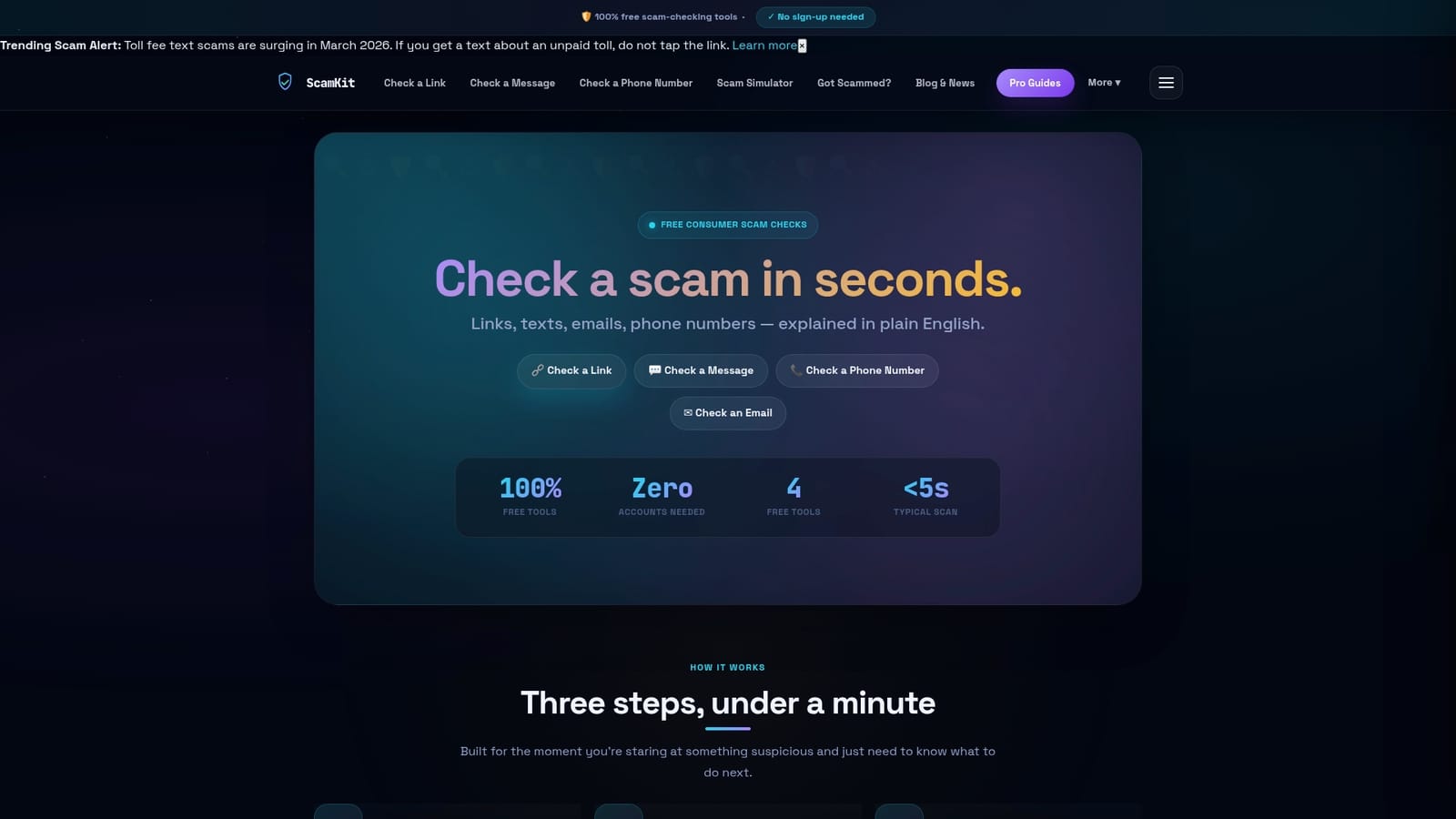
Scamkit also offers tools to analyze suspicious URLs and inspect email headers for spoofed senders, covering the full range of channels scammers use to reach you. If you want to dig deeper into the types of schemes targeting people right now, the phone scam guide on Scamkit covers the most common methods with clear, practical advice. Whether you got a one-ring call, a fake bank alert, or a voice that sounded a little too much like your nephew, Scamkit gives you a fast way to check before you act.
FAQ
Why do scammers prefer phone calls over emails or texts?
Phone calls allow scammers to apply real-time pressure, adapt to your responses, and trigger emotional reactions that written messages cannot. A live voice feels more authoritative and harder to dismiss, which increases the chance a victim complies.
What is neighbor spoofing?
Neighbor spoofing is when a scammer displays a phone number with your local area code and prefix to make their call appear local. Local numbers are answered three to four times more often than out-of-area calls, so this tactic significantly boosts scammer answer rates.
How can AI voice cloning be used in phone scams?
Scammers use publicly available audio from social media or voicemails to clone a person’s voice with as little as three seconds of audio. That cloned voice can then be used to impersonate a family member or trusted person during a scam call.
What should you do if you receive a silent call?
Do not call back. A silent call is typically used to confirm that your number is active, and calling back can expose you to premium-rate charges or a scripted scam. Let it go and block the number.
What payment method requests signal a scam call?
Any call demanding payment via gift cards, wire transfer, or cryptocurrency is almost certainly a scam. Legitimate government agencies and businesses do not use these payment methods for official transactions.