Essential types of phone scams and how to beat them
TL;DR:
- Phone scams now use sophisticated tactics like AI voice cloning to manipulate victims emotionally.
- Recognizing warning signs such as urgency, secrecy demands, and untrustworthy methods can help prevent scams.
- Building habits like verifying calls, using family code words, and reporting scams are essential for protection.
I first heard about a grandmother who got a call from “her grandson” saying he was in jail and needed bail money wired immediately. She rushed to the bank and sent thousands of dollars before realizing her real grandson was safe at home. That story stuck with me, because it shows exactly how far phone scammers have come. These aren’t clumsy, obvious tricks anymore. They’re sophisticated, emotionally calculated attacks designed to make you panic, act fast, and never question what’s happening. Whether you’re a grandparent, a parent, or a small business owner, understanding the full range of phone scam tactics is your best defense.
Table of Contents
- How to recognize a phone scam: Key warning signs
- Top types of phone scams targeting families and businesses
- Robocalls, one-ring scams, and utility shutoff threats
- How scammers pick their targets: Who’s most at risk?
- Practical steps to protect yourself and loved ones
- Why most anti-scam advice fails and what actually works
- Stay protected: Tools and support for phone scam defense
- Frequently asked questions
Key Takeaways
| Point | Details |
|---|---|
| Scams evolve quickly | Phone scams constantly change tactics, making ongoing awareness critical for all ages. |
| Red flags are repeatable | Common signs like urgency, secrecy, and payment demands indicate a likely scam. |
| Everyone is a potential target | Seniors, families, and business owners all face unique risks from different scam types. |
| Prevention is practical | Simple actions like hanging up, verifying independently, and using digital tools drastically reduce scam risks. |
How to recognize a phone scam: Key warning signs
Before we break down specific scam types, it helps to know the universal warning signs that appear across nearly every phone scam. Scammers rely on a set of core tricks that don’t change much, even as the scripts evolve.
Caller ID spoofing is one of the most common tools. A call can appear to come from your local police department, your bank, or even a family member’s number, when in reality it’s a scammer anywhere in the world. Don’t trust the name or number on your screen alone. Learning to spot suspicious phone calls is the single most important skill you can build.
Here are the main warning signs to watch for on any suspicious call:
- The caller creates immediate urgency, saying you must act now or face arrest, account shutdown, or financial loss
- They demand secrecy, telling you not to tell family members or your bank
- They ask for payment through untraceable methods: gift cards, wire transfers, or cryptocurrency
- They request your Social Security number, bank account details, or passwords
- The call involves threats of legal action, jail, or fines if you don’t comply immediately
- Their story keeps changing or doesn’t quite add up when you ask questions
One particularly alarming development is AI voice cloning scams, where fraudsters use audio samples from social media to recreate the voice of a loved one. The “grandson” asking for bail money now really sounds like your grandson. This technology makes it harder than ever to trust your own ears.
The FTC confirms that common scam mechanics include caller ID spoofing, urgency and panic induction, demands for untraceable payments, and secrecy demands, all specifically designed to bypass your natural instincts.
Pro Tip: Create a family code word that only close relatives know. If someone calls claiming to be a family member in trouble, ask for the code word. A real family member will know it. A scammer won’t.
Never respond on the spot. Even if the situation sounds desperate, hang up and call back using a number you already know and trust.
Top types of phone scams targeting families and businesses
With the core red flags in mind, let’s break down the main types of phone scams you’re most likely to encounter.
1. Government imposter scams
These are among the most reported and most damaging scams. A caller claims to be from the IRS, the FTC, your local police, or even the U.S. Patent and Trademark Office (USPTO). The message is always urgent: you owe back taxes, there’s a warrant for your arrest, or your Social Security number has been compromised.
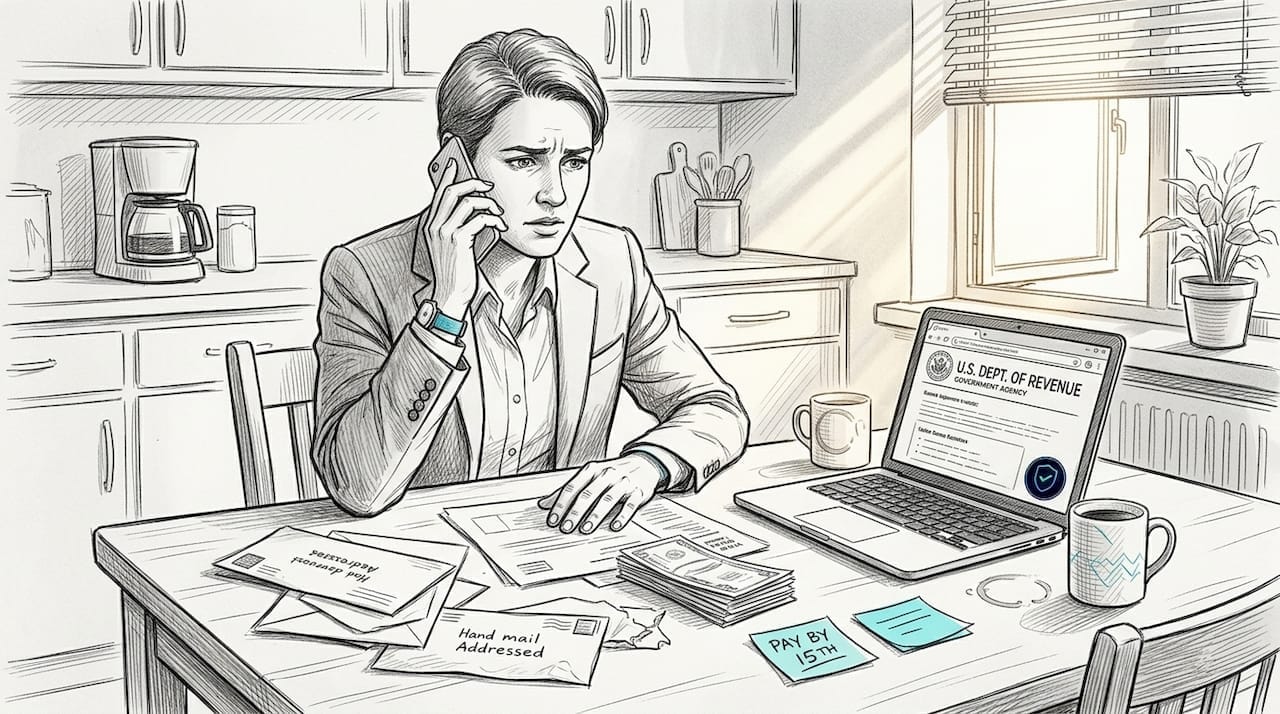
The FTC reports that government imposter scams involve spoofed caller ID, threats of arrest or fines, and demands for immediate payment via gift cards, wire transfer, or cryptocurrency. Businesses get targeted too, often through fake USPTO calls claiming their trademark is at risk. Fake jury duty scams use official-looking websites to look convincing.
2. Tech support imposter scams
You get a call from “Microsoft” or “Apple” saying your computer has a virus. The caller asks you to allow remote access to “fix” the problem. Once they’re in, they either steal data, install actual malware, or charge hundreds of dollars for fake services. The FCC notes that tech support scams frequently target older adults and small businesses, and they often spoof real company phone numbers to appear legitimate.
3. Bank and financial fraud scams
Your bank’s number shows up on your phone. A calm, professional voice tells you there’s suspicious activity on your account and you need to move your money to a “safe account” right away. In reality, that safe account belongs to the scammer. The FTC warns that fake bank fraud alerts are used to trick victims into transferring funds while an accomplice drains the actual account. Losses are especially high for people over 60.
“If your bank needs to verify your identity, they will never ask you to move your money or pay with a gift card. Real bank representatives can wait while you hang up and call the number on the back of your card.”
Watch out for related tactics delivered through text messages. Understanding smishing and text scams can help you recognize when a fake alert is targeting you through multiple channels at once. It’s also worth learning about spotting fake scam alerts so you can tell the difference between a real warning and a trap.
Robocalls, one-ring scams, and utility shutoff threats
Beyond targeted scams, many threats come through automated methods. Here’s how they work and what to do.
Robocalls are prerecorded calls that dial thousands of numbers automatically. They’re cheap to run, easy to scale, and hard to trace. The FCC tracks them closely, and the top robocall complaint categories in 2025 break down like this:
| Scam type | Share of complaints |
|---|---|
| Debt relief | 27% |
| Insurance and healthcare | 11% |
| Government impersonation | 7% |
| Credit card offers | 4% |
| Google listing services | 2% |
Robocalls often spoof local numbers so you’re more likely to pick up. They lead you to press a number to “speak to an agent” or visit a website, both of which are phishing traps.
One-ring scams, also called Wangiri scams, work differently. The phone rings exactly once from an international number, then stops. The FCC confirms that calling back a one-ring number can result in premium international charges added directly to your phone bill. The scammer earns a cut of those fees. It’s simple, low-effort, and surprisingly effective.
Utility shutoff scams are especially stressful. A caller threatens that your electricity, water, or gas will be cut off within the hour unless you pay immediately using a prepaid card. The FCC flags utility shutoff threats as a classic high-pressure tactic designed to bypass rational thinking. Real utility companies send written notices well in advance and accept standard payment methods.
Here’s what to do when any of these hit:
- Don’t call back unknown or international numbers that rang once
- Don’t press buttons or follow prompts on robocalls
- Block numbers using your phone’s built-in tools or a call-blocking app
- Call your utility company directly using the number on your bill to verify any shutoff threat
Knowing how to verify unknown callers is a habit worth building now, before a scam call catches you off guard.
Pro Tip: Avoid answering calls from numbers you don’t recognize. Let them go to voicemail. Legitimate callers leave messages. Scammers rarely do, and if they do, the message usually sets off one of the warning signs listed above.
How scammers pick their targets: Who’s most at risk?
Having examined specific scam methods, it’s crucial to know who scammers target most and why.
Scammers are strategic. They don’t pick victims randomly. They look for people who are trusting, isolated, emotionally reactive, or simply unaware of current tactics.
Older adults are disproportionately targeted and suffer the worst financial losses. According to FTC data for fiscal year 2025, elder fraud losses reached $7.748 billion, a 59% increase over prior years. Impersonation scams alone caused older adults to lose more than $445 million in cases exceeding $100,000 each, an eightfold increase from 2020 to 2024. That’s not a trend. That’s a crisis.
Small business owners are vulnerable in different ways. Business email compromise (BEC) scams, which often start with a phone call to gather information, caused $3 billion in losses across 24,000 reported complaints. Businesses are also targeted by fake vendors, tax impersonators, and false tech support calls aimed at getting remote access to company systems.
Families with young adults are increasingly at risk too. College students get targeted with scholarship scams, fake job offers, and IRS impersonators. Parents get calls about children in fake emergencies.
Here’s a quick breakdown of who gets targeted and how:
- Seniors: Impersonation, Medicare fraud, grandparent scams, romance scams
- Business owners: Tech support, BEC, fake vendor invoices, trademark fraud
- Parents and families: Grandparent scam, emergency scam, utility threats
- Young adults: Student loan fraud, fake employers, IRS threats
Learning to recognize scam tactics by demographic can help you have more targeted conversations with the people you want to protect. The FTC also received 2.6 million Do Not Call complaints in FY2025, the vast majority involving robocalls, which tells you just how widespread the problem has become.
Reading up on preventing online and phone scams is a great next step for families who want a broader strategy.
Practical steps to protect yourself and loved ones
Now that you know who’s most vulnerable, here’s how you can take action to prevent scams, starting today.
The good news is that the most effective protections are simple, free, and don’t require any technical know-how.
- Never give personal or financial information on an unsolicited call. No legitimate organization will cold-call you and immediately ask for your Social Security number, bank account, or passwords.
- Hang up and call back. If someone claims to be from your bank, the IRS, or a government agency, end the call and call back using the number on the official website or the back of your card, not any number the caller gives you.
- Set up a family code word. Choose a simple word only your household knows. Use it to verify the identity of anyone calling in a supposed emergency. This works especially well for protecting grandparents.
- Talk openly about scams with family members. Shame keeps victims quiet. Scammers count on that. Regular, casual conversations about common scam scripts remove that shame and build shared awareness.
- Enable call blocking on your phone. Both Android and iPhone have built-in call filtering tools. Use them. Third-party apps like Nomorobo or Hiya add another layer of screening.
- Report suspected scams. File a complaint with the FTC at reportfraud.ftc.gov and with the FCC. Reporting helps shut down scam operations and protects others.
The FTC’s guidance on phone scam protection is clear: hang up and call back using a known number, never share personal information on unsolicited calls, and use family code words. Those three rules alone would prevent the majority of scam losses.
For business owners, add caller ID screening software, train employees not to share financial or access information over the phone without verification, and create an internal verification protocol for any unexpected financial request.
Pro Tip: Check out phone scam verification tips for a practical guide on building a routine that keeps every call safe without slowing you down.
Why most anti-scam advice fails and what actually works
Here’s something most anti-scam content gets wrong: it treats the problem like an information gap. If people just knew the warning signs, they wouldn’t fall for it. But that’s not how scams work.
The grandmother who wired money to her “grandson” had probably heard about scams before. The problem wasn’t ignorance. It was that in the moment, her brain was flooded with panic, love, and urgency. Emotion overrides information. That’s what scammers design for.
Traditional advice says “don’t give out personal info.” But when a convincing voice says your grandchild is in a hospital, waiting on information feels impossible. The real solution isn’t just knowing the rules. It’s building habits before the panic hits. Family code words, automatic hang-up protocols, and pre-agreed verification steps work because they don’t require you to think clearly under stress.
Another thing that’s often missing from standard advice is the role of realistic voice scam threats. AI voice cloning has made “trust your ears” completely unreliable. Ongoing awareness, updated regularly, and tools that help verify calls in real time are now non-negotiable. Awareness alone isn’t enough. You need systems.
Stay protected: Tools and support for phone scam defense
Protecting yourself and your family from phone scams is a lot easier when you have the right tools working alongside you.
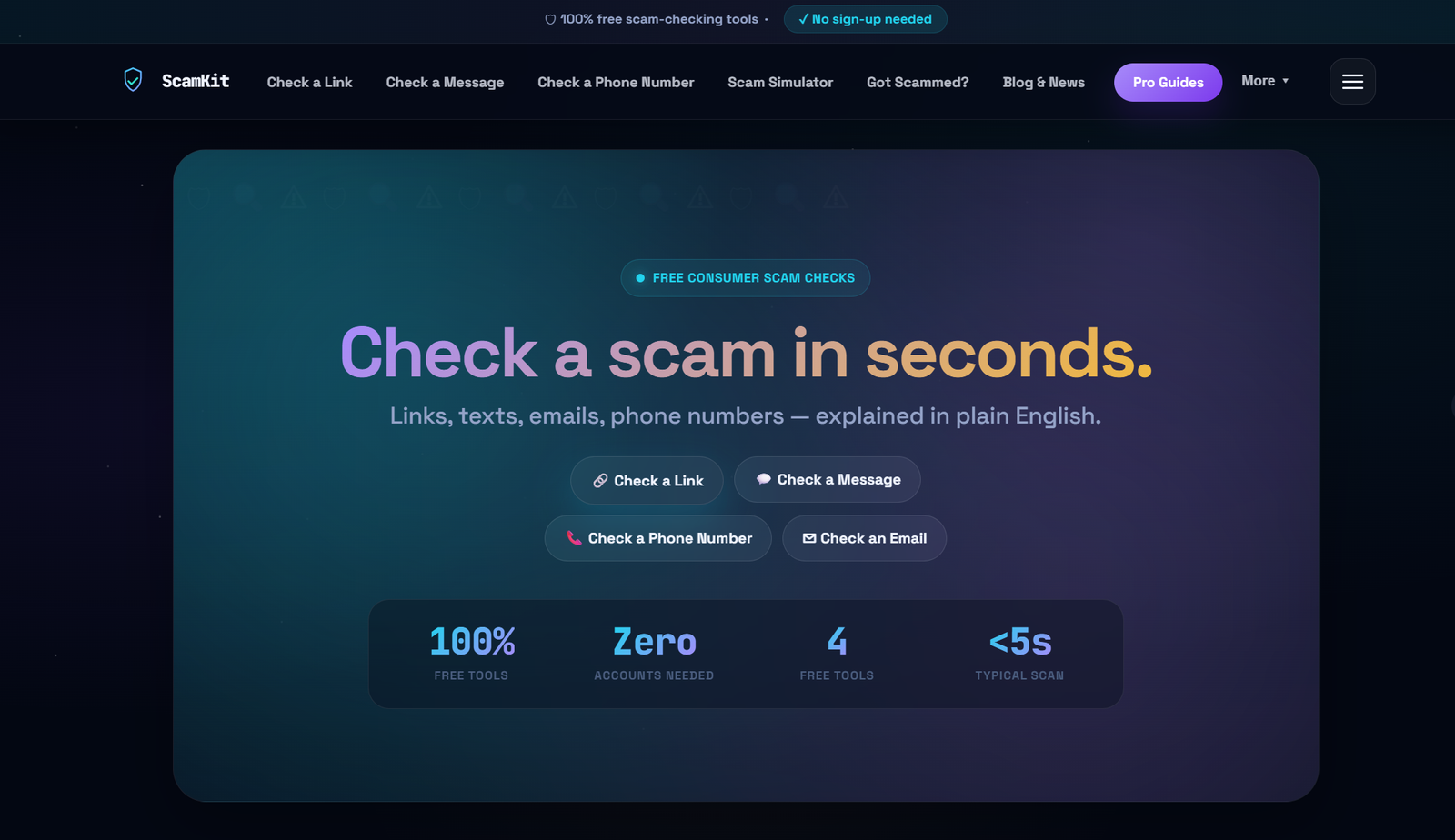
ScamKit’s phone scam checker lets you instantly screen any suspicious number before you call back or engage, giving you a real-time risk assessment with no sign-up required. If you want to go further, the email header analyzer helps you catch phishing attempts that often accompany phone scam campaigns. And for families and small businesses looking to build lasting habits, ScamKit’s resources on proactive cybersecurity walk you through simple steps that keep you ahead of the next threat, not just reacting to the last one.
Frequently asked questions
What is the most common phone scam in 2026?
Robocall scams, particularly about debt relief (27% of complaints) and insurance or healthcare (11%), remain the most common, followed closely by government imposter scams at 7% of reported calls.
How can I tell if a call from the IRS or my bank is real?
Official agencies and banks never demand payment by gift card, wire transfer, or cryptocurrency, and they never threaten arrest over the phone; always hang up and call back using the number listed on the official website or on the back of your bank card.
Who is most at risk for losing money to phone scams?
Older adults face the greatest financial losses: elder fraud reached $7.748 billion in 2025, with impersonation scam losses for seniors jumping eightfold between 2020 and 2024.
What should I do if I think a call is a scam?
Hang up immediately, do not share any information or send money, and verify the situation by calling a known, trusted number directly. Report the call to the FTC at reportfraud.ftc.gov.