Why Scammers Rotate Phone Numbers: What You Need to Know
If you’ve ever noticed that spam calls seem to come from a different number every single time, you’re not imagining it. The reason scammers rotate phone numbers is not random at all. It’s a calculated, technical strategy designed to stay one step ahead of spam filters, carrier detection systems, and even the FTC. Understanding how this works gives you a real advantage. This article breaks down the mechanics behind phone number rotation scams, why the problem is so hard to fix, and what you can do to protect yourself right now.
Table of Contents
- Key takeaways
- Why scammers rotate phone numbers
- The evasion game behind number rotation
- Scammers versus legitimate businesses: a key difference
- How STIR/SHAKEN affects scammer tactics
- What you can do when numbers keep changing
- My take: this problem is not getting simpler
- Check any number before you call back
- FAQ
Key takeaways
| Point | Details |
|---|---|
| Rotation is deliberate | Scammers change phone numbers constantly to avoid spam labels and detection algorithms. |
| Numbers burn out fast | Most scam numbers are active only 2 to 6 days before being retired and replaced. |
| Legitimate businesses do it too | 60% of business leaders rotate numbers monthly, which complicates regulation and detection. |
| Caller ID cannot be trusted | Spoofing lets scammers impersonate any number, including government agencies and banks. |
| Free tools can help | Checking a suspicious number with a free scam checker gives you a fast, data-backed risk assessment. |
Why scammers rotate phone numbers
Most people assume a scammer sticks to one number until it gets blocked, then finds a new one in a panic. The reality is much more organized than that. Phone number rotation scams are structured campaigns, often running on automated infrastructure that cycles through hundreds or thousands of numbers on a pre-programmed schedule.
Here is how it actually works at a technical level. Scammers typically use Voice over Internet Protocol (VoIP) services, which let them provision phone numbers cheaply and in bulk. Rather than buying a single number, they purchase large sequential number blocks called Direct Inward Dialing (DID) blocks, where each number differs only by the last few digits. When one number gets flagged, their software automatically switches to the next in the sequence. No manual effort required.

The median lifespan of a scam phone number tells the story clearly. Research tracking 1,652 unique scam numbers found that most are active only 2 to 6 days before retirement, with just 3.4% reused on consecutive days. That pace is not accidental. It is timed to outrun the speed at which spam databases and carrier algorithms update their records.
Phone-oriented attack delivery, sometimes called TOAD, has evolved into a professional scam campaign model that uses API-driven rotation at scale. Think of it like a factory floor, not a lone criminal at a burner phone.
Pro Tip: If you receive a call from an unfamiliar number, let it go to voicemail. Be aware that even unanswered calls can confirm your line is active, which is information scammers use to prioritize future targeting.
The evasion game behind number rotation
So why go through all this trouble? The core reason is reputation management, and scammers are surprisingly sophisticated about it.
Carrier networks and call analytics platforms assign reputation scores to phone numbers. When a number generates a high volume of short calls, receives frequent hang-ups, or gets reported by users, it accumulates negative signals. Enough signals and the number gets labeled “Scam Likely” on your phone screen, or blocked outright. Scammers burn through numbers specifically to stay below that detection threshold.
Some operations take it even further with cool-down periods. Rather than abandoning a number permanently, they pause use temporarily while third-party reputation databases reset their flags. After a few weeks of dormancy, that number looks clean again and can re-enter the rotation. This is not guesswork. It is a deliberate strategy for maximizing the utility of every number in a pool.
Caller ID spoofing adds another layer of complexity. Spoofing allows scammers to impersonate any phone number, including those belonging to the IRS, Social Security Administration, or your local bank. This is separate from rotation but often used in combination. A scammer might rotate through real VoIP numbers while simultaneously spoofing a trusted caller ID on the outbound call.
“Number rotation is a symptom of a broken spam detection ecosystem. When the system mislabels legitimate calls, it pushes everyone, including bad actors, toward the same workaround: change the number.” Source: TCPA World analysis of FCC NPRM
This is the uncomfortable truth. The same tactic scammers use is also used by legitimate businesses trying to avoid being wrongly labeled as spam. That overlap is exactly what makes this so hard to regulate.
Scammers versus legitimate businesses: a key difference
Here is something that surprises most people. Scammers are not the only ones rotating phone numbers. Legitimate businesses do it too, often for the exact opposite reason: they want to reach customers without being wrongly flagged as spam.
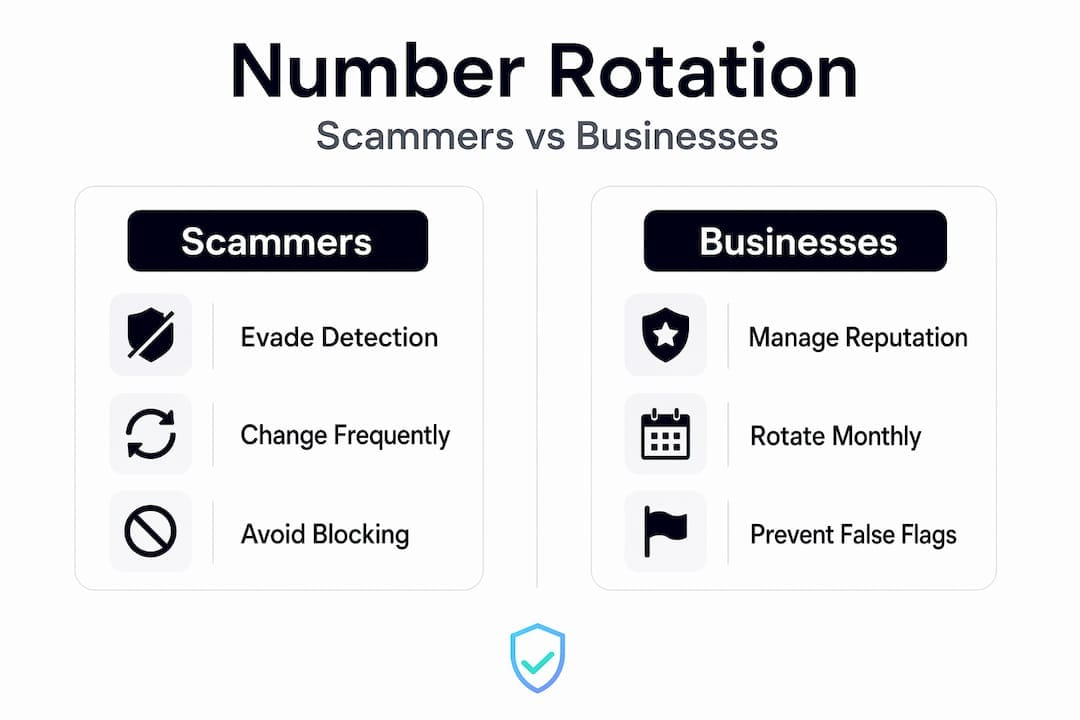
A 2023 survey of 300 business leaders found that 60% rotate numbers multiple times a month, and 29% do so automatically or daily. The practice even has a name in compliance circles: “snowshoeing,” which refers to spreading call volume across many numbers the way snowshoes spread weight across snow, so no single number sinks.
| Factor | Scammers | Legitimate businesses |
|---|---|---|
| Purpose of rotation | Evade spam detection, prolong fraudulent campaigns | Avoid false spam labeling, maintain call answer rates |
| Number lifespan | 2 to 6 days on average | Ongoing, managed systematically |
| Transparency | None. Numbers are disposable and deceptive | Registered, traceable, typically tied to real entities |
| Regulatory intent | Violating law and consumer protection rules | Attempting to comply with regulations |
The FCC has recognized this problem and issued a Notice of Proposed Rulemaking (NPRM) to address number rotation. But banning rotation outright creates a dilemma: it could punish legitimate businesses while scammers, who ignore laws anyway, simply adapt. The FCC is essentially trying to fix a symptom without fully addressing the cause, which is the inaccuracy of spam labeling systems in the first place.
Pro Tip: Just because a number is not labeled “Scam Likely” does not mean it is safe. Scammers using fresh numbers in their rotation will look completely clean to your carrier for the first few days of use.
How STIR/SHAKEN affects scammer tactics
STIR/SHAKEN is a caller ID authentication framework that U.S. carriers have been required to implement since 2021. Its purpose is to verify that a caller is actually using the number they claim to be calling from, which directly targets spoofing.
Here is how it works, step by step:
- When you place a call, your carrier checks whether you are authorized to use that number.
- The carrier signs the call with a digital certificate indicating an attestation level: A (full), B (partial), or C (gateway, often indicating unknown origin).
- The receiving carrier reads that certificate and passes the result to spam-scoring systems.
- Spam scoring algorithms then combine the attestation level with call behavior data, user reports, and third-party reputation databases to decide if the call gets labeled or blocked.
STIR/SHAKEN has had a measurable effect. Estimates credit it with reducing robocall volume by 20 to 40% since 2021. That is real progress. But it has not eliminated scams, and here is why: STIR/SHAKEN verifies identity but does not block calls on its own. A scammer who legitimately provisions a new VoIP number gets a clean attestation. They are verified. They are just also fraudulent.
Scammers have adapted in several ways. SIM swapping, where they hijack a legitimate phone number by tricking a carrier into reassigning it, lets them use authenticated numbers. Offshore VoIP providers with weaker verification standards give them a steady supply of new numbers. And since carrier spam scoring relies on behavioral signals that take time to accumulate, a fresh number always has a grace period. Scammers exploit that window every single time.
What you can do when numbers keep changing
Understanding why do scammers use new numbers is useful. Knowing how to respond is more useful. Here are the most practical steps you can take:
- Do not trust caller ID alone. As established, scammers using fake phone numbers can display any number they want. A call appearing to come from your bank could be a spoof. Always hang up and call the institution directly using the number on their official website.
- Let unknowns go to voicemail. Legitimate callers leave messages. Note that even letting it ring provides some information to scammers, but answering without screening is riskier.
- Check suspicious numbers before calling back. If you receive a missed call from an unknown number, do not return it blindly. Use a free phone lookup tool to check whether that number has been reported. Scamkit’s phone scam checker aggregates data from multiple security sources and gives you a clear verdict in seconds.
- Report scam calls. Report to the FTC at ReportFraud.ftc.gov and to your carrier. Community reporting is one of the fastest ways to get a rotating scam number flagged and removed from circulation.
- If your number is being spoofed, contact your carrier immediately. You may not be able to stop it, but your carrier can add notes to your account and, in some cases, help with remediation.
For a deeper look at the types of calls you might encounter, the ScamKit guide to phone scams covers specific patterns and what to watch for with each one.
My take: this problem is not getting simpler
I’ve spent years tracking how phone fraud evolves, and the honest observation is this: every technical fix creates a new adaptation. STIR/SHAKEN was a significant step forward. Scammers responded by provisioning legitimate numbers at scale. Carrier spam scoring got smarter. Scammers responded with cool-down cycles and sequential DID blocks.
What I find genuinely frustrating is that the regulatory conversation keeps focusing on the wrong layer. Banning rotation sounds good in a press release. But as long as the underlying spam detection ecosystem produces false positives at the rate it does, rotation will remain the path of least resistance for everyone, including businesses that have no fraudulent intent whatsoever.
What actually moves the needle, in my view, is a combination of better consumer education and faster, more accurate community-driven databases. When individuals check a number before calling back, when they report suspicious calls consistently, when they stop treating caller ID as trustworthy, the signal quality in detection systems improves for everyone. The technology can only be as good as the data it receives.
Stay skeptical of unknown numbers. Use verification tools. Report what you find. That is not a passive stance. It is how you contribute to making the system more accurate for the next person.
. Isaiah
Check any number before you call back
You now know that scammers change phone numbers constantly, and that a clean caller ID means almost nothing on its own. The next time you get a suspicious call or a missed call you do not recognize, do not guess.
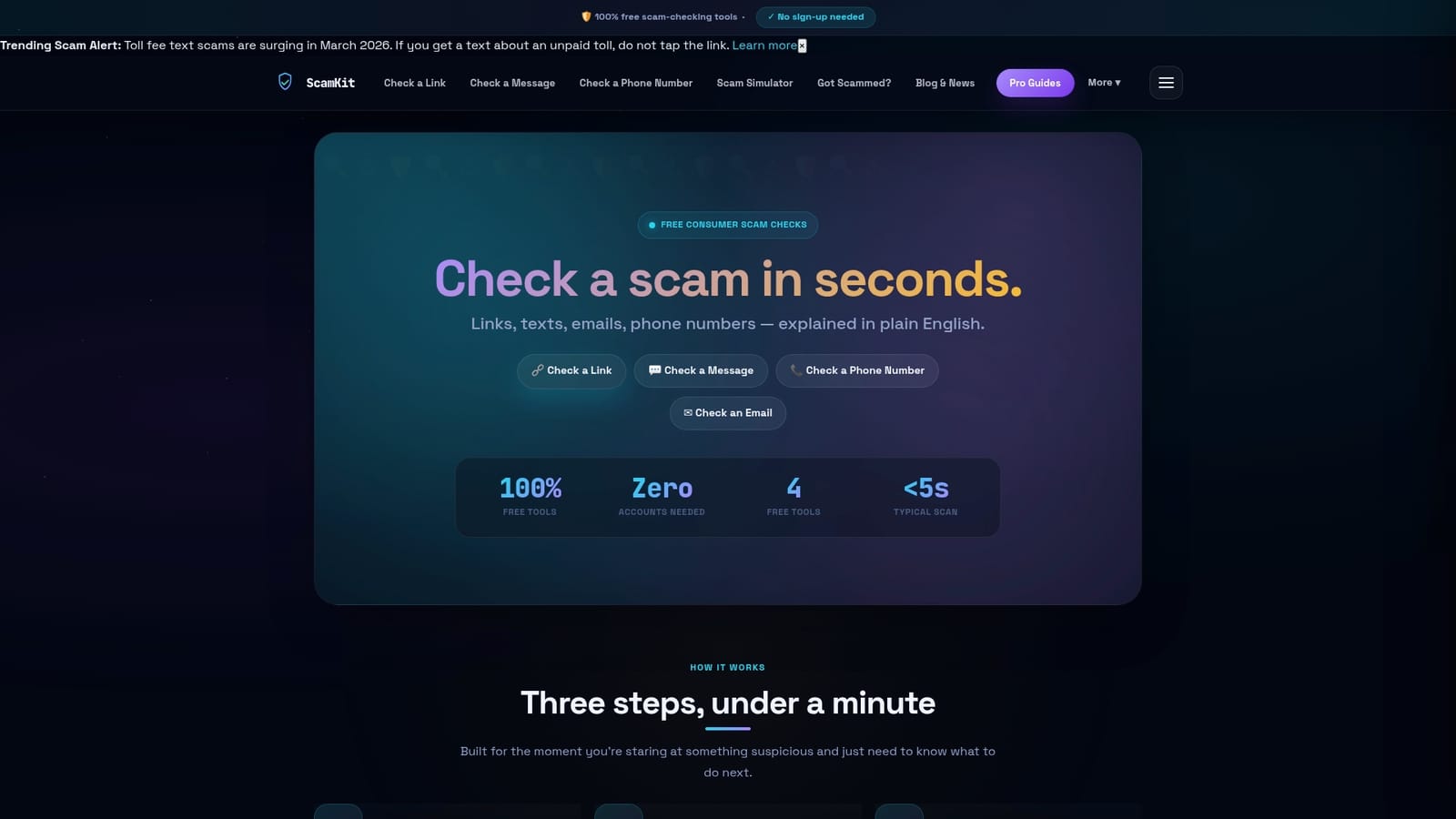
Scamkit’s free phone number lookup tool checks any number against aggregated data from trusted security sources and gives you a plain-English verdict in seconds. No account required. No cost. If the number has been flagged by other users or appears in known scam databases, you will know before you call back. You can also use Scamkit’s full suite to check suspicious links, emails, and messages in the same place. One tool, multiple layers of protection.
FAQ
Why do scammers keep changing their phone numbers?
Scammers rotate phone numbers to avoid spam labels and carrier blocking systems. Most scam numbers are retired within 2 to 6 days before detection systems can update and flag them.
Can STIR/SHAKEN stop phone number rotation scams?
STIR/SHAKEN reduces spoofing but does not block calls or prevent scammers from provisioning fresh legitimate numbers. It has reduced robocall volume by an estimated 20 to 40%, but rotation tactics continue to bypass it.
How can I tell if a call is from a rotating scam number?
You often cannot tell by looking at the number alone. Checking an unfamiliar number with a free tool like Scamkit’s phone checker before returning a call is the most reliable way to get a risk assessment.
Do legitimate businesses also rotate phone numbers?
Yes. Research shows 60% of business leaders rotate numbers multiple times per month to avoid false spam labeling. This overlap with scammer behavior is one reason phone number rotation is so difficult to regulate.
What should I do if my number is being spoofed by scammers?
Contact your carrier right away to document the issue. You cannot fully prevent spoofing, but reporting it helps carriers and detection databases flag the activity and protect other consumers from calls appearing to come from your number.