Instant Phone Number Fraud Check: Stay Safe Now
You get a call from an unknown number. The caller claims to be your bank, your utility provider, or even the IRS. Your gut tightens. Before you say a word or hand over any information, you need to know whether that number is legitimate. An instant phone number fraud check can give you an answer in seconds, and that speed can mean the difference between staying safe and becoming a victim. This guide walks you through the tools, steps, and warning signs you need to verify any suspicious number right now.
Table of Contents
- Key Takeaways
- What you need for an instant phone number fraud check
- Step-by-step guide to verifying a suspicious number
- Common mistakes when verifying suspicious numbers
- How to interpret results and take action
- Manual checks vs. automated verification tools
- My honest take on phone fraud detection
- Check any suspicious number instantly with Scamkit
- FAQ
Key Takeaways
| Point | Details |
|---|---|
| Speed matters | Real-time phone verification tools return fraud scores and line data in under one second. |
| Caller ID is not reliable | Spoofing technology can falsify the name and number displayed on your screen. |
| Multiple sources beat one | Cross-checking a number across several tools produces far more accurate results than a single lookup. |
| Community reports fill gaps | Crowd-sourced scam reports catch emerging fraud patterns faster than static databases alone. |
| Act on results immediately | Block, report, and document any number with a high fraud score or unresolved red flags. |
What you need for an instant phone number fraud check
Before you start verifying a suspicious number, you need the right tools in front of you. The good news is that most of what you need is free and works directly in a browser.
The basic requirements are simple: a device with internet access, the suspicious phone number written down exactly as it appeared, and at least two reputable lookup services to cross-reference. Writing the number down first sounds obvious, but many people forget the exact format after the call ends.

The data points that matter most
Not all lookup results are equal. When you run a phone number through any service, these are the data points worth paying attention to:
- Line type: Is the number a mobile, landline, or VoIP (Voice over Internet Protocol) line? VoIP lines are frequently used by scammers because they are cheap and easy to rotate.
- Carrier name: A legitimate business calling from a consumer prepaid carrier is a red flag.
- Fraud score: Real-time fraud APIs return a score on a 0 to 100 scale, with higher scores indicating greater risk.
- Owner name: Reverse lookup services can identify the owner’s name with up to a 90% success rate for US and Canada numbers.
- Community abuse reports: Has anyone else flagged this number recently?
Tool comparison at a glance
| Tool type | Speed | Key data provided | Cost |
|---|---|---|---|
| Free reverse lookup sites | Moderate | Owner name, location, basic carrier | Free |
| Real-time verification API | Under 1 second | Fraud score, line type, carrier, risk flags | Free to paid tiers |
| Community scam databases | Moderate | User-reported scam activity, recent flags | Free |
| Phone carrier lookup tools | Fast | Carrier name, line type | Free |
Community-driven threat intelligence adds something static databases cannot: the ability to catch a newly rotated scam number that has only been active for a few hours. When someone reports a number in real time, that information ripples out to everyone checking the same number moments later.
Pro Tip: Bookmark two or three lookup tools before you need them. Searching for tools in the middle of a suspicious call slows you down and increases the chance you will make a hasty decision.
Step-by-step guide to verifying a suspicious number
Follow these steps every time you receive a call or message from an unknown or suspicious number. The process takes less than three minutes.
-
Write down the number in full. Include the country code. The standard format is +1 (area code) followed by the seven-digit number for US lines. Do not rely on your call log alone since scammers sometimes route calls through apps that alter how the number is saved.
-
Run it through a real-time API or lookup tool. Paste the number into a service that queries live telecommunications data. Enterprise-grade phone checks pull line type, carrier, and a live fraud score simultaneously, saving you time. Note the fraud score and line type first.
-
Check community scam reports. After getting the technical data, search the number in a community-driven scam database. A number that was registered yesterday with zero history but has already received ten community abuse reports is more suspicious than one with a moderate fraud score and years of clean history.
-
Look for specific fraud indicators. High fraud scores (typically above 75 out of 100), VoIP line types registered under unknown carriers, and recently activated numbers are all warning signs. Reliable phone verification must check global authoritative datasets, not just whether the number can receive a text.
-
Cross-verify using official sources. If the caller claimed to be from your bank or a government agency, hang up and call that organization back using the number printed on their official website or your billing statement. This is the single most reliable step you can take. Independent official sources are always more trustworthy than the contact information a caller provides to you.
Pro Tip: Never call back a number that appears in your missed call log if you suspect fraud. Use the official website to find the real contact number. Scammers count on you calling their line back.
Knowing why scammers rotate phone numbers so frequently also helps you understand why a single check is never enough. A number that looked clean last week may be actively fraudulent today.
Common mistakes when verifying suspicious numbers
Even careful people make these errors. Avoiding them will sharpen your verification process significantly.
- Trusting caller ID. Spoofing technology can make a fraudulent caller appear on your screen as a trusted institution, including major banks and government agencies. The name you see means nothing on its own.
- Relying on one tool. Free lookup tools aggregate public records but often lack real-time accuracy. A single result that says “no threat found” is not a clean bill of health.
- Ignoring inconclusive results. If your lookup returns no owner information, no carrier details, and no community reports for a number that just called you urgently, treat that as suspicious. Absence of data is itself a signal.
- Overlooking SIM swap risk. Even a number that checks out as legitimate may be connected to a compromised account. If you are being asked to verify your identity over the phone, read up on SIM swap attacks before sharing anything sensitive.
“Caller ID should never be trusted alone. The only safe verification method is calling back through an independently sourced official number.”. Rivermark Credit Union Security Guidance
Scammers rotate numbers constantly. A number that is flagged today may have been clean yesterday, and a clean number today may be in active use tomorrow. This is why building a habit of verification matters more than trusting any single result.
How to interpret results and take action
Once you have your results, you need to decide what to do. Here is how to read what you are seeing and respond appropriately.
Understanding fraud scores is the first step. A score below 30 generally suggests low risk, a score between 30 and 74 warrants caution, and anything above 75 is a strong signal to avoid engaging with that number. These thresholds are not universal across every tool, so check the scoring guide for whichever service you use.
After reviewing the results, take one of these paths:
- Block and ignore: If the number has a high fraud score, known scam reports, and no verifiable owner, block it immediately. Do not call back, do not reply to any text, and do not click any link the caller may have sent.
- Report it: Document the number, the time of contact, what the caller claimed, and your verification results. Report it to the FTC at ReportFraud.ftc.gov and to your carrier. Community reporting matters because crowd-sourced reports help flag emerging scam patterns faster than static databases can.
- Proceed cautiously: If the result is inconclusive, call the claimed organization back through their verified official number before sharing any personal information. Understanding the full range of phone scam tactics gives you better context for what you might be dealing with.
Set up call blocking on your phone as well. Both iOS and Android have built-in options to silence unknown callers. Third-party call screening apps add another layer. These are not replacements for manual verification, but they reduce how often you face the situation in the first place.
Manual checks vs. automated verification tools
Choosing the right approach depends on how often you deal with suspicious numbers and how much time you want to spend.
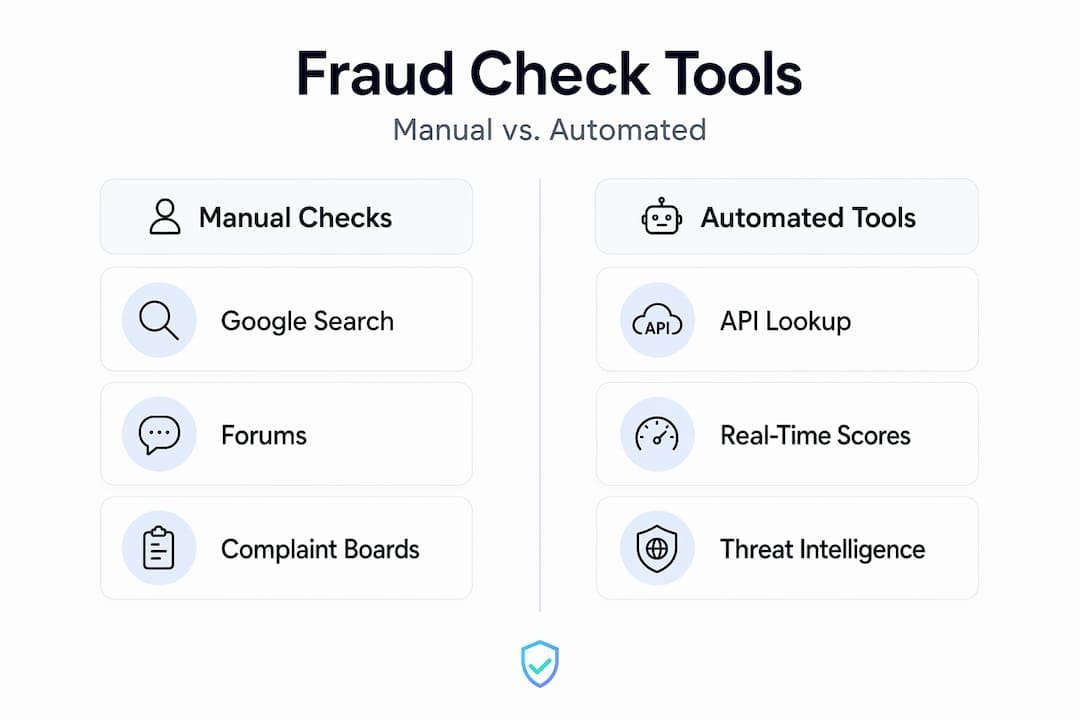
Manual checks involve searching a phone number on Google, browsing community complaint boards, and cross-referencing public records. This costs nothing and can surface useful context, especially for numbers tied to known scam operations. The drawback is time. A thorough manual search can take ten to fifteen minutes, and the data may be weeks or months out of date.
Automated real-time tools are faster by a wide margin. Real-time verification APIs return results in under a second, pulling live carrier data, fraud scores, and abuse history in a single query. Free consumer tools land somewhere between the two, offering faster results than pure manual searches but sometimes missing the depth of enterprise-grade lookups.
| Approach | Speed | Accuracy | Cost | Best for |
|---|---|---|---|---|
| Manual Google search | Slow | Variable | Free | Occasional users |
| Free reverse lookup site | Moderate | Moderate | Free | Individuals, seniors |
| Real-time fraud API | Under 1 second | High | Free to paid | Frequent targets, businesses |
| Community scam database | Moderate | High for recent scams | Free | All user types |
For most individuals, combining a free real-time lookup tool with a quick community database check covers about 90% of what you need. If you are a small business owner who receives dozens of unknown calls weekly, investing in a service that queries live telecom data directly is worth the cost.
Proactive cybersecurity habits are most effective when they are layered. No single tool covers every scenario, but using two or three consistently builds a strong defense.
My honest take on phone fraud detection
I’ve spent a lot of time watching how people respond to suspicious calls, and the pattern I keep seeing is the same. People assume that if a number looks legitimate on their screen, it probably is. That assumption is where the damage happens.
In my experience, the single most underrated step in phone number fraud detection is the independent callback. Not a callback to the number that called you. A callback to the number you found yourself, on the organization’s real website or on the back of your card. It feels like extra effort, but it is the only step that cannot be faked.
What I have also learned is that technology helps, but community intelligence often moves faster than any database. When someone reports a scam number, that report benefits thousands of other people checking the same number hours later. Tools that tap into crowd-sourced reporting give you a live picture of what is happening right now, not what was happening six months ago.
My honest advice is this: do not wait until you are mid-conversation with a suspicious caller to start thinking about verification. Build the habit before you need it. Keep your tools bookmarked, know your bank’s real phone number, and learn to pause before you respond to any urgent-sounding caller. Scammers rely on creating pressure. Verification removes that pressure entirely.
. Isaiah
Check any suspicious number instantly with Scamkit
If you received a call that did not feel right, the fastest move is to verify it before you do anything else.
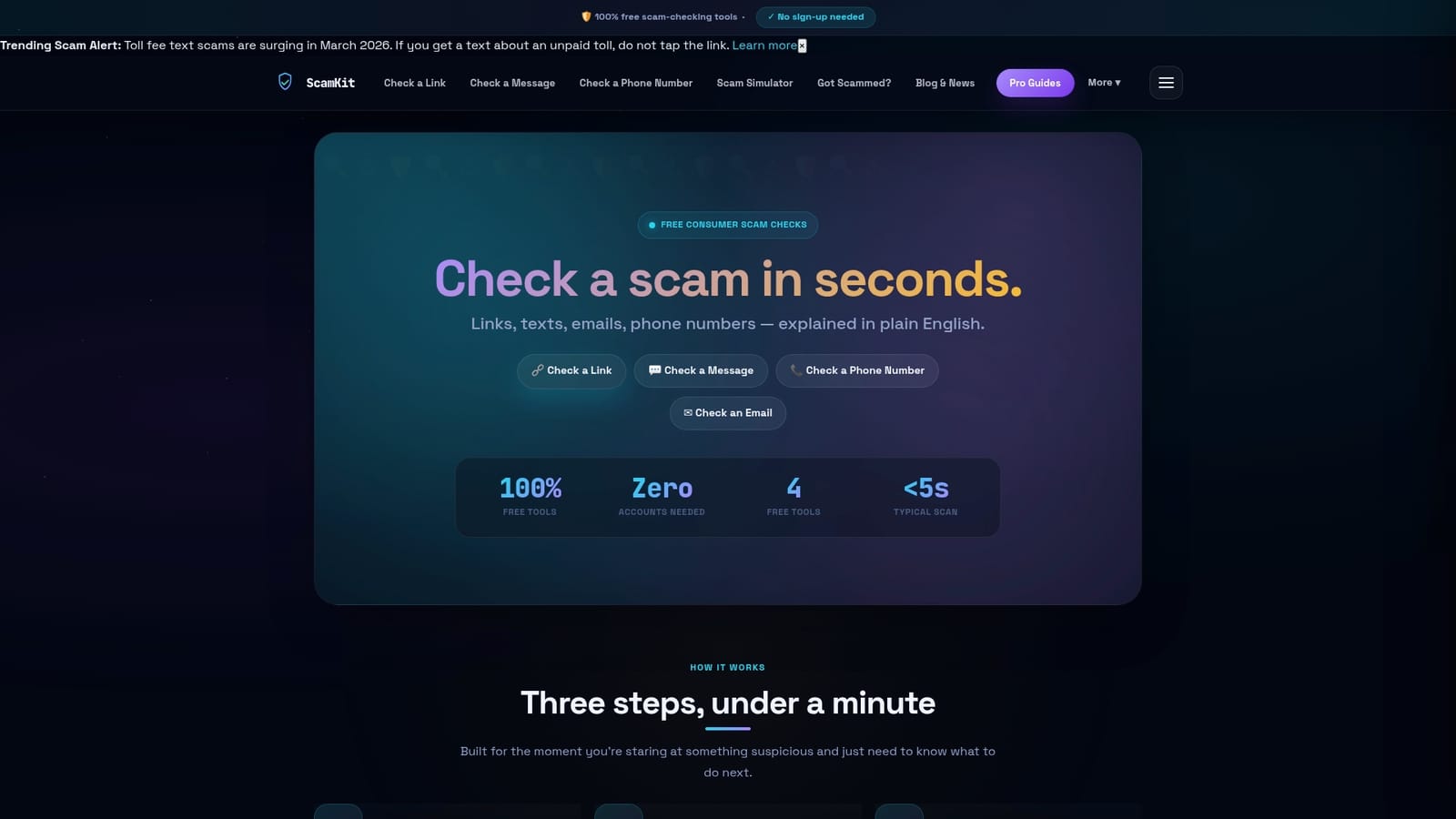
Scamkit’s free phone number fraud checker runs a multi-source scan in seconds, pulling fraud scores, line type, carrier data, and community abuse reports all in one place. No sign-up required. You paste the number, and you get a plain-English verdict right away. For anything beyond phone numbers, Scamkit also offers a free URL scanner and an email header analyzer to cover every angle of a potential scam. Visit Scamkit to protect yourself for free today.
FAQ
What is an instant phone number fraud check?
An instant phone number fraud check is a real-time lookup that returns fraud scores, line type, carrier details, and community abuse reports for any phone number within seconds, helping you decide whether a caller is legitimate before responding.
Can caller ID be trusted to verify a number?
No. Caller ID spoofing allows fraudsters to display any name or number on your screen, including major banks and government agencies. Always verify using an independent source.
What fraud score should worry me?
Most real-time verification tools use a 0 to 100 scale. Scores above 75 indicate high fraud risk and warrant blocking the number and reporting it to your carrier and the FTC.
Is it safe to call back an unknown suspicious number?
No. If you suspect fraud, do not call the number back. Instead, find the organization’s official contact number from their website or a billing statement and call that directly.
What should I do after identifying a fraudulent number?
Block the number, document the details, and report it to the FTC at ReportFraud.ftc.gov and to your phone carrier. Community reporting also helps others by flagging the number in shared scam databases.