Why scam awareness matters: protect your family online
TL;DR:
- Fraud losses reached 12.5 billion dollars in 2024, reflecting an evolving scam threat.
- Scams now utilize AI deepfakes, voice cloning, and personalized tactics to deceive victims.
- Increasing awareness, community sharing, and proactive tools are crucial for scam prevention.
Last year, a friend of mine got a call from someone claiming to be her bank. The voice was calm, professional, and knew her account details. She almost transferred $3,000 before something felt off. She was lucky. Millions of others aren’t. Fraud losses hit $12.5 billion in 2024, a 25% jump from the year before. That’s not a story about careless people. That’s a story about a threat that’s evolving faster than most of us realize. This guide breaks down how scams work, who they target, and what you can actually do to protect yourself and the people you care about.
Table of Contents
- The true cost of scams: More than money
- Why anyone can be a target: Unmasking scam tactics
- How scam awareness empowers and protects
- Why overconfidence is dangerous: Facing scam realities
- Our take: Rethink scam awareness for real resilience
- Take the next step: Tools to strengthen scam awareness
- Frequently asked questions
Key Takeaways
| Point | Details |
|---|---|
| Scams affect everyone | All ages and backgrounds are at risk, not just the careless or uninformed. |
| Awareness is powerful defense | Recognizing tactics and red flags can prevent devastating losses and emotional harm. |
| Technology ups the threat | New AI tools make scams harder to spot, so ongoing education is crucial. |
| Shame fuels underreporting | Open communication and community support help protect more people. |
| Proactive action works best | Combining personal vigilance with the right tools is key to real resilience. |
The true cost of scams: More than money
With the financial figures in mind, let’s look at how these scams impact real people beyond just dollars lost.
The numbers are staggering. The FBI IC3 logged $16.6 billion in losses from 859,000 complaints in 2024 alone. That’s a record. And it still doesn’t capture the full picture, because most scams never get reported at all.
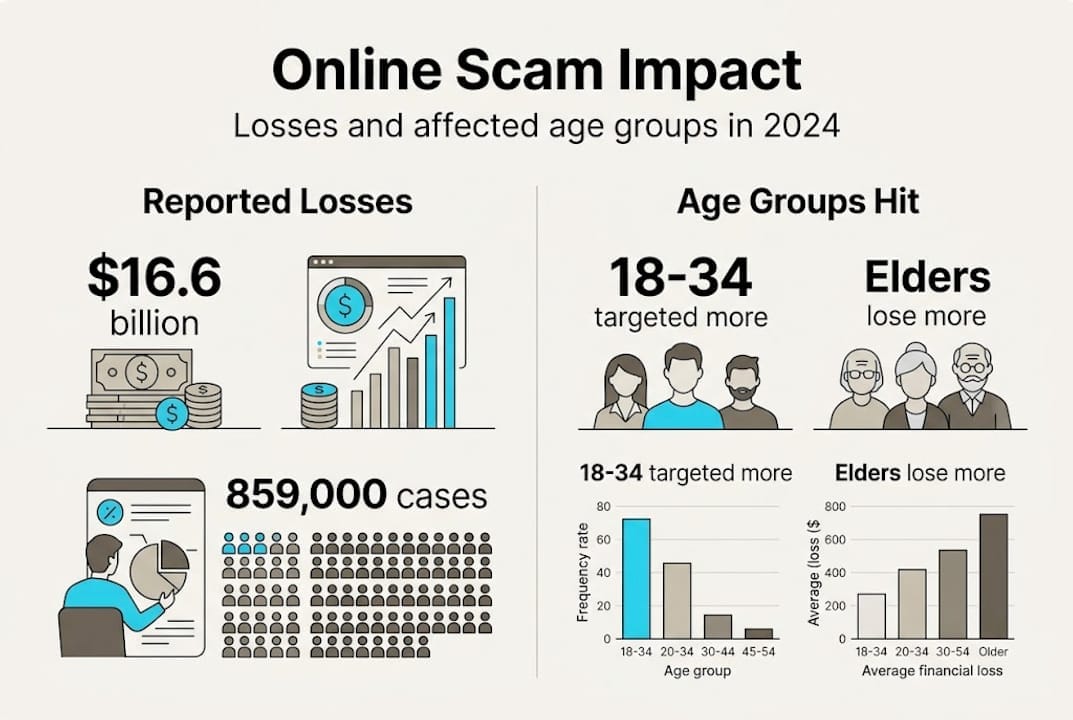
Who’s losing the most? The table below breaks it down:
| Age group | Common scam types | Avg. loss per incident |
|---|---|---|
| 18 to 34 | Social media fraud, fake jobs | $400 to $800 |
| 35 to 54 | Investment scams, phishing | $1,200 to $3,000 |
| 55 to 74 | Tech support, romance scams | $5,000 to $15,000 |
| 75 and older | Grandparent scams, wire fraud | $20,000 and up |
Older adults lose the most per incident. But younger adults are targeted more often. No age group is off the hook.
The financial damage is only part of it. Scams cause serious psychological harm, including depression, anxiety, and social isolation. Victims often blame themselves. They feel foolish. That shame keeps them from telling anyone, which means they don’t get help and the scammer never gets reported.
Here’s what victims commonly experience after being scammed:
- Anxiety and hypervigilance about every phone call or email
- Shame and self-blame that makes it hard to talk about what happened
- Strained relationships when family members find out
- Financial stress that takes months or years to recover from
The silence is part of the problem. When people don’t report, scammers keep operating. If you or someone you know has been through this, recovering after scams takes time, but it starts with knowing you’re not alone and not at fault.
“Being scammed doesn’t mean you’re stupid. It means someone worked hard to trick you. These are professionals at deception.”
Why anyone can be a target: Unmasking scam tactics
Understanding the consequences, it’s important to see how sophisticated and convincing scams have become.
Scammers don’t just send poorly written emails anymore. They’ve upgraded their tools. Urgency, authority impersonation, fake emergencies, and AI deepfakes are now standard parts of the scammer’s playbook. Voice cloning can make a call sound exactly like your grandchild. Deepfake video can make a CEO look like they’re giving you instructions.
Here’s how old-school scams compare to what’s happening now:
| Old-school tactics | Modern tactics |
|---|---|
| Generic phishing emails | Personalized AI-written messages |
| Fake lottery letters | Deepfake video calls |
| Cold calls with obvious accents | Voice-cloned family members |
| Obvious fake websites | Near-perfect copycat sites |
| Vague urgency (“act now”) | Hyper-specific fake emergencies |
The gap between a real message and a fake one has never been smaller. That’s what makes AI deepfake scams so dangerous. You can’t always trust what you see or hear.
Scammers also exploit trust. They impersonate your bank, the IRS, Amazon, or even a family member. They create a sense of panic so you act before you think. That’s the design. Panic shuts down critical thinking.
Common psychological tricks scammers use:
- Fake authority: Claiming to be from the government, law enforcement, or your bank
- Artificial urgency: “Your account will be closed in 24 hours”
- Fear tactics: Threatening arrest, fines, or account freezes
- Isolation: Telling you not to tell anyone or the situation will get worse
Pro Tip: Even if a message looks like it’s from someone you trust, always verify through a separate channel. Call the person directly using a number you already have, not one provided in the message. Understanding common scam techniques helps you recognize these patterns before they catch you off guard.
How scam awareness empowers and protects
Given these clever scams, awareness becomes your first and best line of defense.
Awareness prevents scams by helping people recognize red flags and report suspicious activity. But generic warnings like “don’t click links” aren’t enough anymore. Personalized education, the kind that fits your actual life and habits, works far better.
Here’s a practical framework you can start using today:
- Learn the red flags. Unexpected requests for money, gift cards, or personal info are almost always scams. Legitimate organizations don’t ask for payment via wire transfer or gift card.
- Pause before you act. Scammers want you to react fast. Taking 10 minutes to think, or calling someone you trust, can stop a scam cold.
- Talk to your family. Share what you learn. Older relatives and teenagers are especially vulnerable. A quick conversation can save thousands of dollars.
- Use verification habits. Got a suspicious email from your bank? Go directly to the bank’s website. Don’t click the link in the email.
- Report what you see. Even if you didn’t lose money, reporting helps authorities track patterns and warn others.
- Check links before you click. Use tools designed to flag risky URLs before you open them.
The numbers show how widespread the problem is. 41% of US adults have lost money to scams, and 64% of adults over 50 say they’re worried about being targeted. Worry alone doesn’t protect you. Action does.
Building scam awareness for families means making these conversations normal, not scary. When your family knows what to look for, everyone becomes a layer of protection for each other. Explore scam avoidance strategies to build habits that stick.
Why overconfidence is dangerous: Facing scam realities
But even being aware is not enough if you fall into common traps about who gets scammed.
Here’s a statistic that should give everyone pause. 73% of US adults have faced online scams, and 69% say they’re confident they could spot one. But 43% of those confident people have still been victimized. Confidence without current knowledge is a vulnerability, not a shield.
The biggest myths that put people at risk:
- “Only uneducated people fall for scams.” False. Executives, lawyers, and tech workers get scammed regularly.
- “I’d never fall for something so obvious.” Scams aren’t obvious anymore. They’re designed by teams of people using psychological research.
- “Scams only happen to older people.” Young adults report losing money to scams more frequently than any other group.
- “If I’ve never been scammed, I’m safe.” Past safety doesn’t predict future risk, especially as tactics evolve.
“Overconfidence is exactly what scammers count on. If you think you’re immune, you stop paying attention.”
New tactics are making this worse. Smishing (text-based phishing), recovery scams (targeting people who’ve already been scammed), and AI-generated voice calls are all on the rise. These aren’t the scams your parents warned you about.
Real protection comes from ongoing learning, not a one-time read. Bookmark a practical scam prevention guide and revisit it. Share updates with your family. Treat scam awareness like you’d treat any other safety habit: something you practice regularly, not something you check off a list.
Our take: Rethink scam awareness for real resilience
Most scam prevention guides give you the same list. Don’t click suspicious links. Don’t share your password. Use two-factor authentication. That advice isn’t wrong, but it’s not enough anymore.
Here’s what we actually believe: awareness without community is fragile. One person knowing the signs helps. A whole family or neighborhood knowing the signs is a real defense. Scammers thrive on isolation and silence. The antidote is open conversation.
Losses keep rising even as awareness campaigns run constantly. That tells us the current approach isn’t working well enough. We need to move from passive awareness to active resilience. That means verifying before trusting, pausing before acting, and talking openly when something feels wrong, even if you’re embarrassed.
Sharing your experience, even a near-miss, protects others. It breaks the shame cycle. It also helps people understand that being targeted isn’t a character flaw. It’s a sign that scammers see you as a potential opportunity. Knowing how to spot fake scam alerts is part of that ongoing education. Real resilience is built together.
Take the next step: Tools to strengthen scam awareness
If you want to put scam awareness into action for yourself and your family, a few free tools and smart habits can make a major difference.
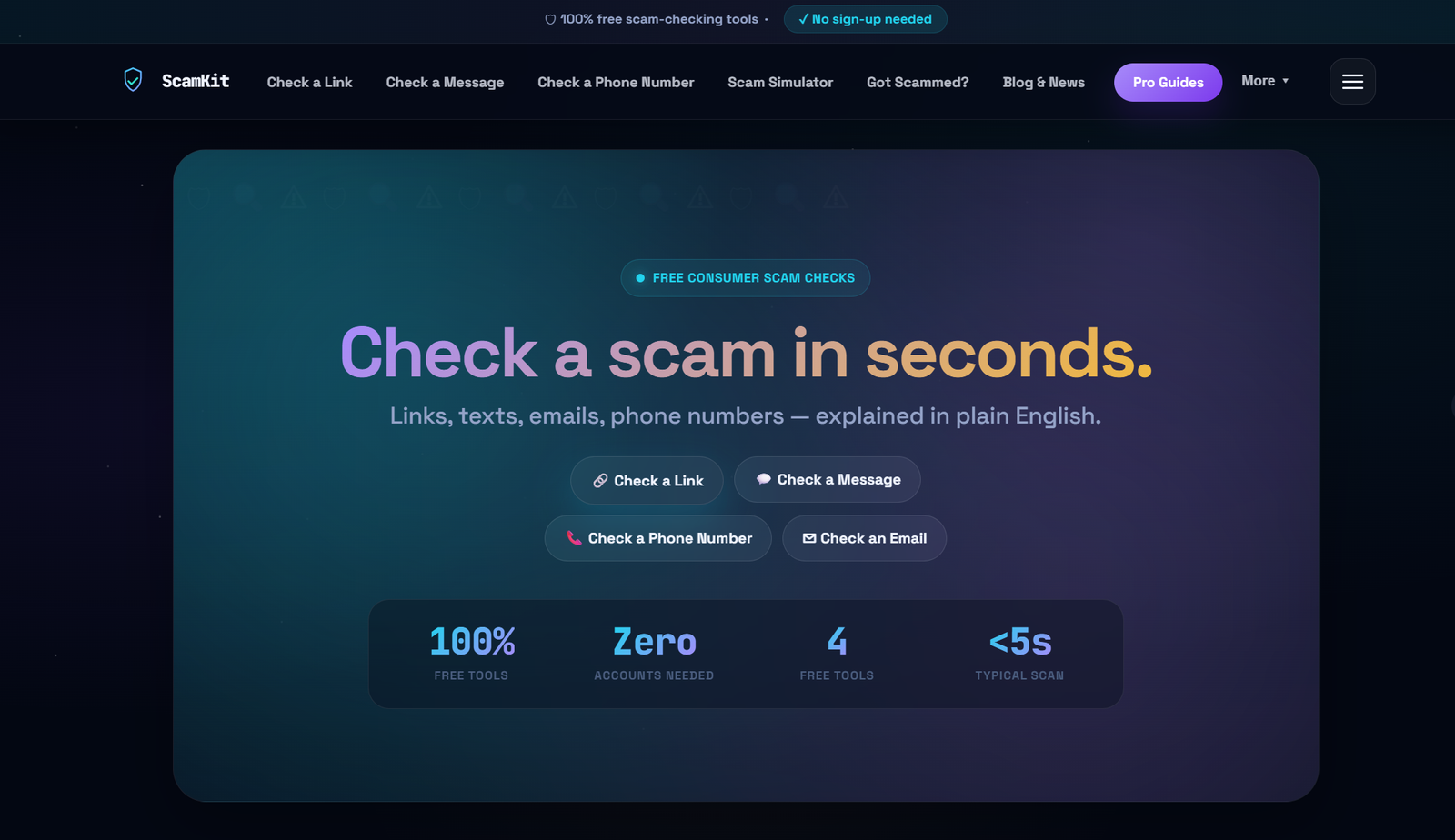
ScamKit is built exactly for this. It’s a free platform that helps you check suspicious links, analyze messages, and screen phone numbers before you respond or click. No sign-up required. No personal data collected. Just fast, clear answers when you need them most. Taking a proactive cybersecurity approach means not waiting until something goes wrong. Start with our link risk checker to instantly flag dangerous URLs. Share it with your family. Make it part of your routine. The best time to build these habits is before you need them.
Frequently asked questions
What are the most common online scam tactics?
The most common include impersonating authority figures, creating fake emergencies, and using AI-generated messages or voice cloning to sound convincing. These tactics are designed to trigger panic and fast action.
Who is most at risk for online scams?
Everyone faces risk, but elders lose more per incident while young adults are targeted more frequently. No income level or education background provides immunity.
How does scam awareness help prevent loss?
Awareness helps people recognize warning signs, slow down before reacting, and know exactly how and where to report suspicious activity.
Why do many scams go unreported?
Victims often feel deep shame or embarrassment, which means many incidents go undisclosed. This silence lets scammers keep operating without consequence.
What should I do if I think I’ve been scammed?
Stop all transactions immediately, then report to the FTC or FBI, and talk to someone you trust. Acting quickly limits the damage and helps build enforcement data.