How to recover from scams: regain control in 5 steps
TL;DR:
- Act quickly by contacting banks, payment platforms, and reporting to authorities within hours.
- Recovery likelihood varies greatly depending on the payment method, with credit cards offering the best chances.
- Be cautious of scams promising guaranteed recovery for a fee, as legitimate services do not demand upfront payments.
Being scammed feels like the floor drops out from under you. One moment everything seemed fine, and the next you’re staring at a transaction you didn’t authorize or a message that now looks obviously fake. The shame, anger, and panic hit all at once. You’re not alone. Fraud losses hit $12.5 billion in 2024 alone, up 25% from the year before. Millions of people go through exactly what you’re feeling right now. The good news is that there are real, concrete steps you can take to limit the damage, protect yourself going forward, and start rebuilding your confidence online.
Table of Contents
- First moves: What to do immediately after a scam
- How recovery really works: What to expect and common roadblocks
- Protect yourself from recovery scams and new threats
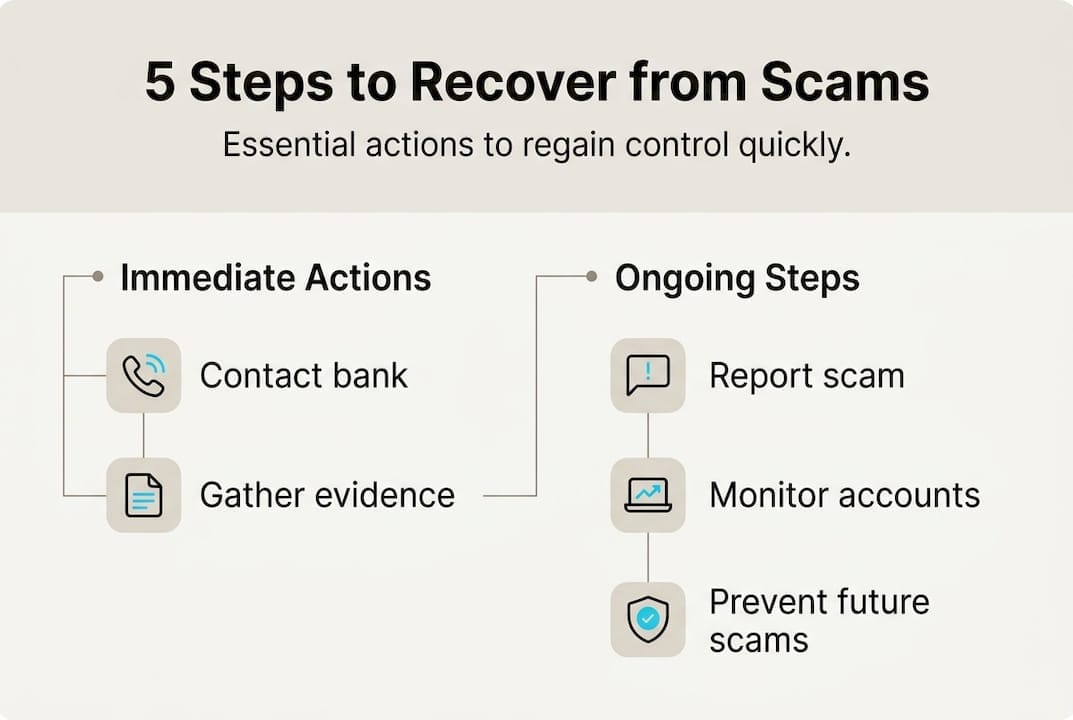
- Securing your future: Recovery, monitoring, and prevention steps
- Why lasting recovery from scams means changing more than just passwords
- Detect and prevent scams with ScamKit tools
- Frequently asked questions
Key Takeaways
| Point | Details |
|---|---|
| Act quickly | Immediate contact with banks and payment platforms greatly increases your chance of recovery. |
| Know your odds | Recovery is possible for some payments, but crypto and gift cards are rarely refundable. |
| Stay vigilant after scams | Watch for further contact from scammers or fraudulent ‘recovery services’ offering false promises. |
| Build long-term safety | Ongoing monitoring, strong security habits, and family education are essential to prevent repeat scams. |
First moves: What to do immediately after a scam
After understanding the shock that comes with being scammed, it’s vital to act fast. The first few hours matter more than almost anything else. The faster you move, the better your chances of stopping a transaction or freezing an account before the money disappears for good.
Here’s a quick look at your recovery odds depending on how you paid:
| Payment method | Recovery possible? | Time window |
|---|---|---|
| Credit card | Yes, often | Days to weeks |
| Bank wire | Sometimes | Hours only |
| Gift cards | Rarely | Hours only |
| Cryptocurrency | Almost never | Minutes |
Contact your financial institution immediately to attempt a transaction reversal or account freeze. This applies whether you paid by wire, gift card, credit card, or crypto. Every minute counts.
Here’s what to do right now:
- Call your bank or card issuer. Tell them what happened and ask them to stop or reverse the transaction. Ask about chargeback options if you paid by credit card.
- Contact the payment platform. If you used PayPal, Venmo, Zelle, or a similar service, report the transaction immediately.
- Report to the gift card issuer. For gift cards, report to the issuer such as Apple or Google with your receipt. For wire transfers, contact the sender like Western Union right away.
- File a report with the FTC. Go to ReportFraud.ftc.gov. This creates an official record and helps investigators track patterns.
- Document everything. Save screenshots, emails, texts, and transaction records. You’ll need these for every report and dispute you file.
Act now, not later. Many people wait because they feel embarrassed or hope the situation will resolve itself. It won’t. Assuming lost funds are gone before you’ve even tried to recover them is one of the most common and costly mistakes victims make.
Pro Tip: Gather every receipt, confirmation email, and chat log before you make a single call. Having this evidence ready speeds up every step that follows and strengthens your case with banks and authorities. You can also review actions after getting scammed for a structured checklist to work through.
How recovery really works: What to expect and common roadblocks
Now that you know which actions to take first, it’s important to set expectations about what recovery might look like. The honest truth is that getting your money back is not guaranteed, and for some payment types, it’s extremely unlikely.
Here’s a realistic breakdown:
| Payment method | Recovery odds | Typical timeframe |
|---|---|---|
| Credit card | Moderate to high | 1 to 6 weeks |
| Bank wire | Low | 24 to 72 hours max |
| Gift cards | Very low | Hours only |
| Cryptocurrency | Near zero | Minutes |
The IC3’s Recovery Asset Team froze $561.6 million out of $848.4 million attempted in 2024, a 66% success rate on cases where intervention was initiated quickly. But that’s for cases where law enforcement got involved fast. Individual recovery, especially for crypto and gift cards, is far less likely.
Why are crypto and gift cards so hard to recover? Once a gift card code is used or a crypto transaction is confirmed on the blockchain, the funds move almost instantly to wallets or accounts controlled by scammers, often overseas. There’s no central authority to call and no freeze button.
Credit cards are your best protection. Banks and card networks have chargeback processes designed for exactly this situation. You still need to act quickly, but the window is wider.
The biggest obstacles victims face include:
- Waiting too long before reporting, which closes the reversal window
- Using untraceable payment methods like crypto or gift cards that scammers specifically request
- Fear of embarrassment that delays reporting to banks or authorities
- Incomplete records that weaken dispute claims
Data from the FTC shows that older adults lose the most per incident, with a median loss over $1,000 for people 70 and older compared to $417 for people in their 20s. Investment scams top the list for total losses.
Even if full recovery isn’t possible, filing reports matters. It helps law enforcement build cases and may protect others. You can explore recovery and support options and read real scam recovery stories to understand what others have been through.
Protect yourself from recovery scams and new threats
As you begin the recovery process, it’s crucial to be aware of risks that can make things even worse. This part is hard to hear, but it’s important: scammers often target people who have already been victimized.
Here’s how it works. After you report a scam or your information gets shared, scammers resell victim lists to other fraudsters. You may start receiving calls, emails, or messages from people claiming they can get your money back, for a fee. This is called a recovery scam, and it’s one of the cruelest tricks in the playbook.
Watch for these warning signs:
- They contact you out of nowhere, claiming to know about your scam
- They promise guaranteed recovery of your lost funds
- They ask for upfront payment, often by wire, crypto, or gift card
- They pressure you to act fast or keep the process secret
- They claim to be from a government agency but ask for payment
No legitimate service will ever guarantee recovery or demand payment upfront. Real law enforcement and financial institutions do not charge fees to help you. If someone does, it’s a scam.
The FTC is clear on this: never pay upfront fees, share sensitive information, or use untraceable payments with any so-called recovery service that contacts you unsolicited.
Pro Tip: Only use contact information you find directly on your bank’s official website or from a law enforcement agency’s verified page. Never call back numbers left in voicemails or texts from unknown senders.
For more context on what these scams look like in practice, check out examples of recovery scams and learn how to find support after a scam from trusted sources.
Securing your future: Recovery, monitoring, and prevention steps
With an understanding of immediate actions and the pitfalls of recovery scams, it’s finally time to focus on protecting yourself for the long haul. This is where you shift from reacting to rebuilding.
Start with these steps:
- Check your credit reports. Visit AnnualCreditReport.com to monitor your credit weekly. Look for accounts you didn’t open or inquiries you don’t recognize.
- Change all your passwords. Start with email, then banking, then any account that shares the same password. Use a password manager to keep track.
- Enable two-factor authentication (2FA). This adds a second verification step to your logins, making it much harder for someone to break in even with your password.
- Place a fraud alert or credit freeze. Contact one of the three major credit bureaus (Equifax, Experian, or TransUnion) to add a fraud alert. A freeze is even stronger and prevents new credit from being opened in your name.
- Notify relevant institutions. If personal documents like your Social Security number were shared, contact the Social Security Administration and the IRS to flag potential misuse.
For ongoing monitoring, keep these tools in your routine:
- Free weekly credit reports at AnnualCreditReport.com
- Identity monitoring services (many banks offer these free)
- FTC scam alert emails at consumer.ftc.gov
- ScamKit tools for checking suspicious links and messages before you click
The FTC’s action plan tool helps you list trusted contacts and companies so you always know who to call in a real emergency. Share this with family members too, especially anyone who may be less familiar with how scams work.
Building these habits takes a little time but pays off enormously. Read through essential scam avoidance tips and learn how to check if a call is a scam so you’re ready for whatever comes next.
Why lasting recovery from scams means changing more than just passwords
Here’s something most guides won’t tell you. You can change every password, freeze your credit, and file every report, and still feel deeply unsettled. That’s because scams don’t just take money. They take trust.
Many victims carry shame for months, blaming themselves for falling for something that was specifically engineered to deceive them. These scams are professionally designed to exploit urgency, authority, and emotion. Falling for one doesn’t mean you’re naive. It means you’re human.
True recovery means giving yourself permission to learn from what happened without punishing yourself for it. It means setting clearer boundaries around requests for money or personal information, even from people who seem trustworthy. And it means asking for help, whether from a counselor, a trusted friend, or a community of others who’ve been through the same thing.
Emotional recovery is just as real as financial recovery. Both take time, and both are worth pursuing.
Resilience comes from honest reflection, not just action. The people who bounce back strongest are the ones who learn scam avoidance strategies and stay engaged with their own safety, rather than trying to forget the experience ever happened.
Detect and prevent scams with ScamKit tools
If you’re ready to continue your recovery, explore tools built to help you stay protected. ScamKit was built for exactly this moment. Whether you’re still processing what happened or you’re ready to take the next step, there are free resources here that require no sign-up and no personal information.
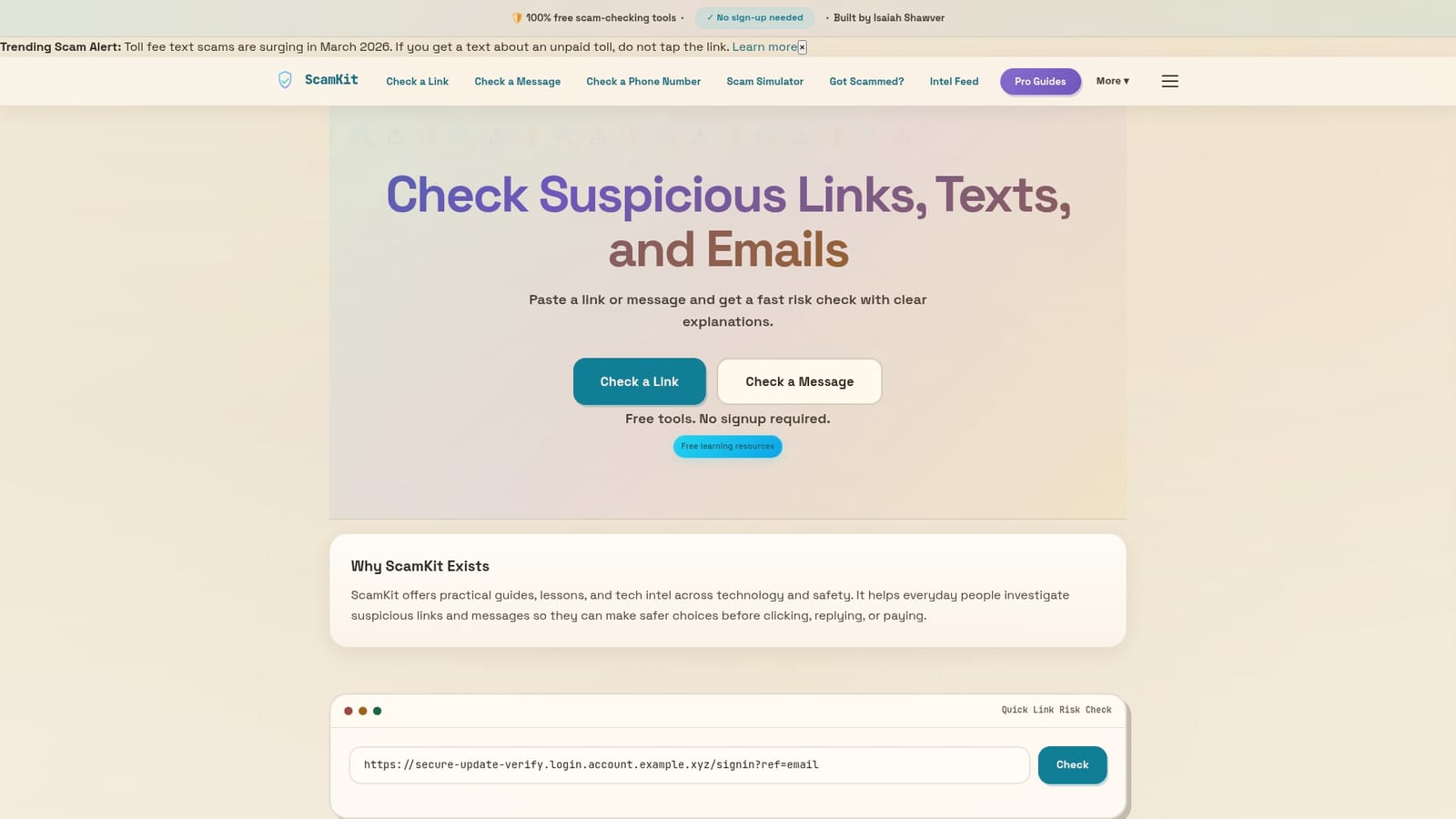
Use the URL checker to analyze suspicious links before you click. Read through the what to do if scammed guide for a clear action checklist. And if you want to build stronger habits going forward, the proactive cybersecurity tips page walks you through practical steps to stay ahead of threats. Share these tools with your family. The more people around you who know how to spot a scam, the safer everyone becomes.
Frequently asked questions
What should I do first if I realize I’ve been scammed?
Contact your bank or payment provider immediately to attempt a transaction reversal, and report the scam to the FTC at ReportFraud.ftc.gov. Speed is critical because most reversal windows close within hours.
Can I recover lost money from crypto or gift card scams?
Recovery is very rare for both. Once confirmed, crypto and gift card transactions are nearly impossible to reverse, so reporting quickly to issuers and exchanges gives you the best, though slim, chance.
How can I avoid recovery scams after being scammed once?
Only communicate with official organizations you contact directly. Never pay upfront fees or share sensitive information with any unsolicited recovery service, no matter how convincing they sound.
What are key steps to prevent being scammed again?
Monitor your credit regularly, use strong unique passwords, enable 2FA on all accounts, and talk to your family about scam risks. The CFPB fraud guide offers a solid starting point for building these habits.